As promised in my previous post, this post is going to describe all about the experience that was the Museum of Toulouse! Known locally as the Museum of Natural History of Toulouse. I’ll label the sections of this post by the names of the exhibit themselves that way, if you decide to visit yourself, you can follow in my footsteps and see the same things I did!
The Museum can be found quite centrally in the city of Toulouse connected to the Jardin des Plantes, which I visited later in the day. With three floors of exhibits and plenty of spaces for different workshops and activities. It’s quite the ideal place for a school trip or family outing! Today though, as with most of my adventures, I’m just here by myself.
I bought my tickets online the night before, a cheap 8€ for my ticket (the perks of still being a student). After entering the reception, struggling to understand the receptionists instructions (sorry for my bad French), and collecting a map of the building, I entered through the gates and into the first exhibit.
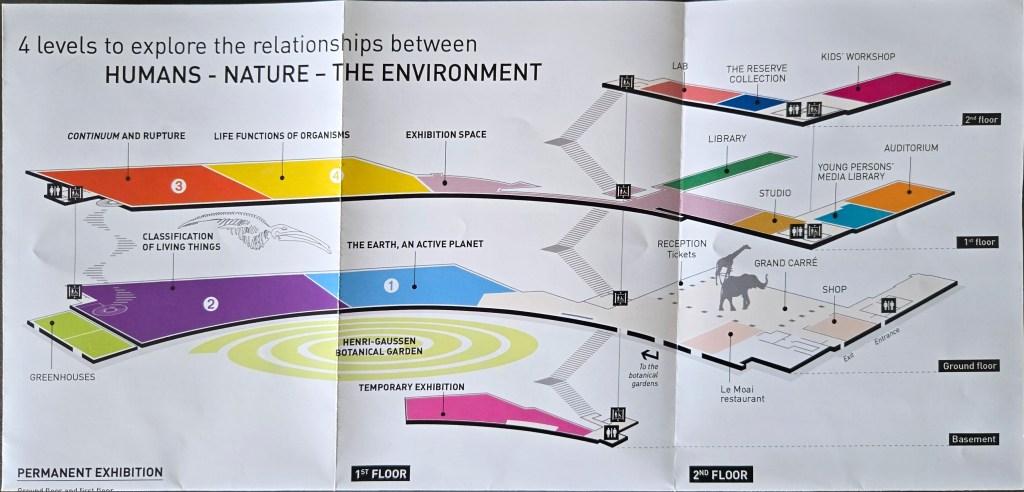
The Earth, an Active Planet
This first exhibit, as the name suggests, describes the geology and geography of this great planet that we call home, the Earth!
The exhibit was laid out in a long winding path, starting from the basics and building up to more modern day evolutions of our planet. One of the first things I came across was a long list describing all of the naturally occuring elements of the periodic table in order of their mass (from Hydrogen to Uranium). As I’m in France, all of the elements were listed with their French names which I found really fascinating! See if you can spot the differences in spelling and names in the list here:

Fun Fact: The idea of ‘naturally occurring’ elements can actually be split into two categories. Hydrogen to Iron – which are formed through fusion in stars, and Cobalt to Uranium – which are formed in supernova explosions!
Amongst this section of the exhibit were many different examples of crystals and minerals. These are simply complicated structures of the basic elements, for example: Diamond is a crystalline structure of Carbon, and Ruby is a crystalline structure of Aluminium Oxide and Chromium.
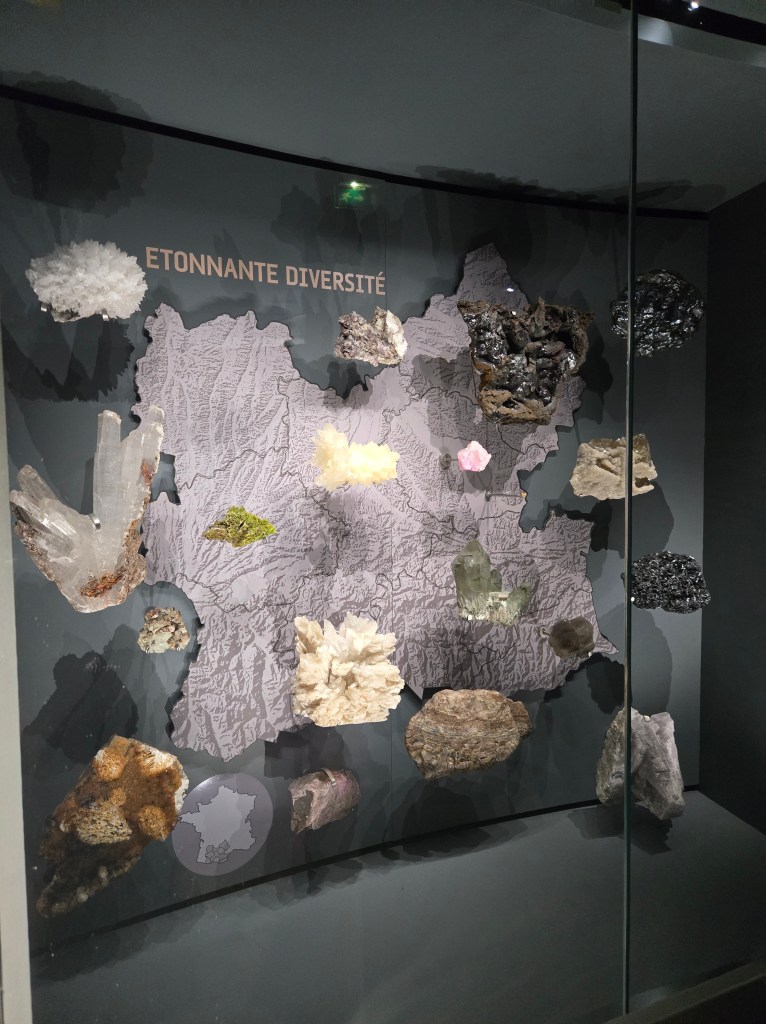
The minerals they had on display were sorted by where they can be found. Some crystals like Obsidian form around volcanoes, whilst others like Geodes form inside of rocks underground. My favourite collection though was all of the minerals that can be found in the nearby area of Toulouse showing just how diverse the surrounding area can be!
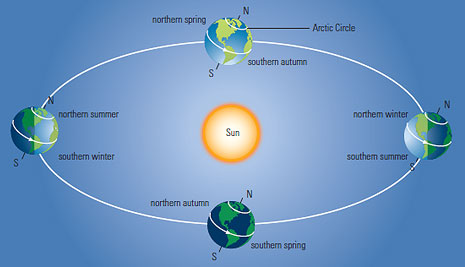
Another part of the exhibit showed the Earth’s relationship with the Sun and how it had helped to change the planet in the early days of the Solar System. There was even a board about how the summer solstice worked with the Earth’s orbit, I wonder where else you could learn about that?
Moving around, I came to a section describing the tectonic plates of the Earth and how things like Earthquakes occur. This section was incredibly interactive. Built into the floor were large moving platforms that, on cue, would shake violently simmulating just what it feels like to be in an earthquake yourself. A monitor on the wall showed the latest three earthquakes that had been detected around the world however small they may have been. The info showed that there had been a 4.2 magnitude earthquake in North Macedonia just that morning!
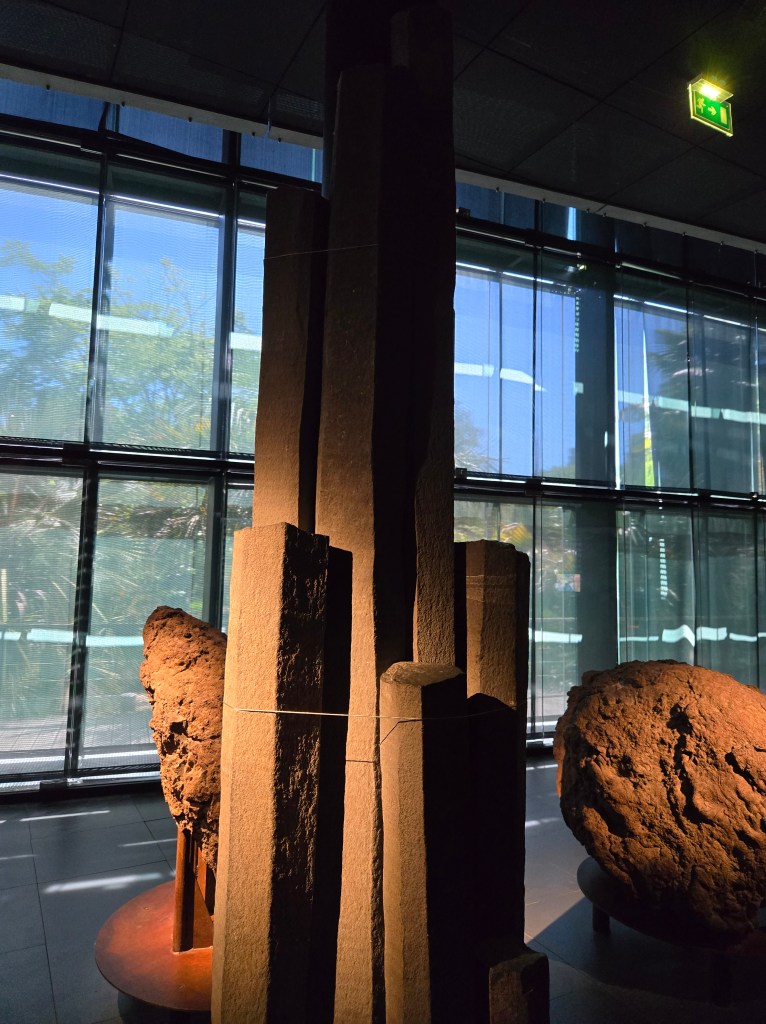
This section directly linked into the next section: Volcanoes! A fascinating map overlaid the lines of the tectonic plates with the active volcanoes around the Earth, and of course they lined up perfectly! The volcano section showed a few more minerals that form due to magma and lava such as Basalt which tends to form in large hexagonal pillars:
Classification of Living Things
Moving on from the geological Earth, I changed exhibit into one focusing more on living and not so living creatures. In case you didn’t know, all animals are distantly related in some way, our impressive family tree is known as the Phylogenetic tree and any animal can be linked to any other through it!
The museum had an excellent exhibit showing this, with different lines spreading out to the different modern day creatures and showing how they related back to humans.
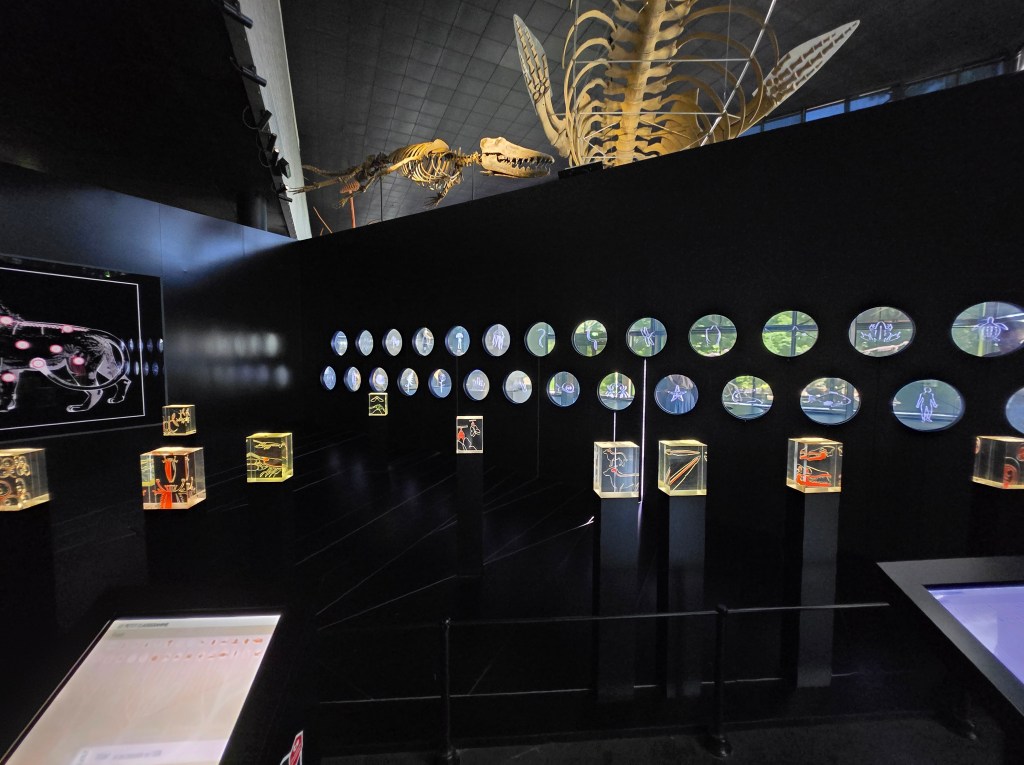
The focus of this exhibit though, and as terrifying as it was I must show you, was the museum’s large collection of taxidermied animals.
Taxidermy
Taxidermy is the art, and sometimes science, of preserving an animals body after its death. Depending on the animal they can be stuffed and mounted in such ways that they can be properly studied.
Horrifying Fact: The word taxidermy comes from the Greek words taxis (arrangement) and derma (skin). So the word taxidermy means ‘Arrangement of Skin’!
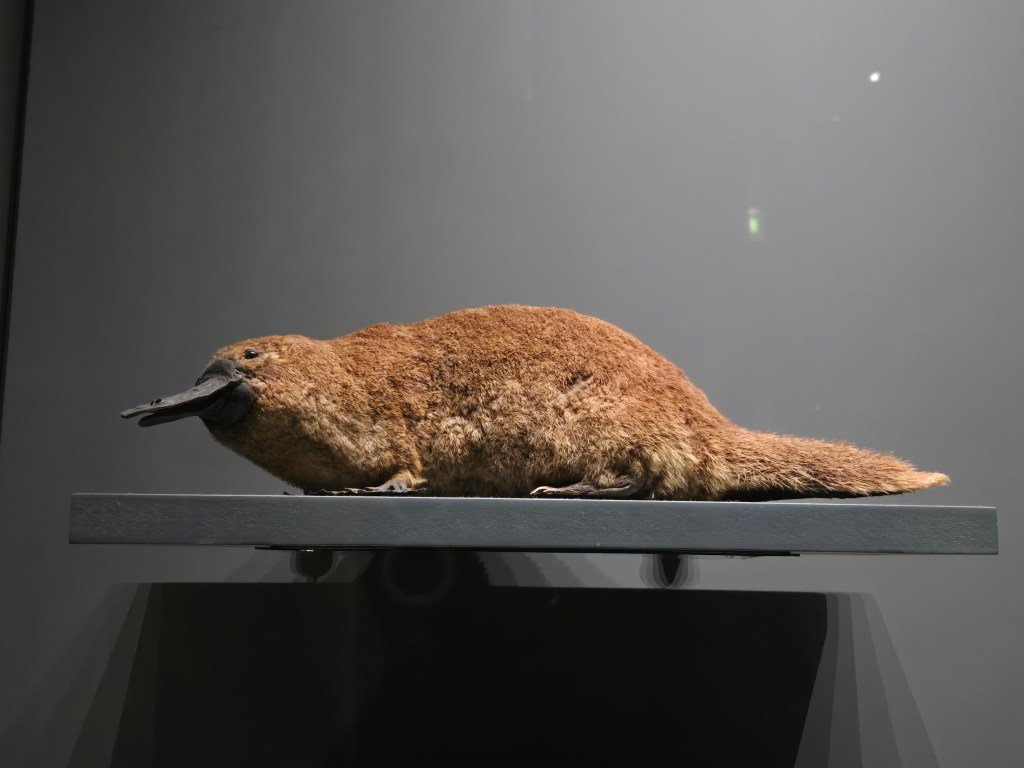
The museum has hundreds of taxidermied animals from all around the world. From Platypuses to Badgers, Lions to Butterflies, everything was displayed sorted by their different environment and animal families. Some were honestly a little cute to look at, but others…
I swear others…
I would be looking at them, admiring their fur, their muscles, or their scales. Then I would blink, or turn my back, and ever…
So…
Slightly…
They would have moved! They would no longer be in the same place that I saw them before. Of course maybe it was the dark lighting of the museum, or the hot Toulouse sun getting to me. Or maybe…
…just maybe.
Moving on.

In another closeby section they had a collection of dried plants. Now, loyal followers of this website will know my affinity for plants, I love taken pictures of rare specimens on hikes and finding out everything I can about their species. No research was needed for me here though, everything was written about beautifully describing the different methods of photosynthesis each plant has and how they each spread their seeds around their respective woodlands.
They even had a whole case full of different kind of pine cones! It’s like they knew I was coming and brought out the fine china 😀
Continuum and Rupture
Once I was able to tear myself away from the plants, I scurried up the spiral staircase to the third exhibit of my visit: Continuum and Rupture. This section focused on the evolution of life on Earth, showing how some parts of evolution were much more continuous and others simply erupted out of nowhere, or disappeared into nothing.
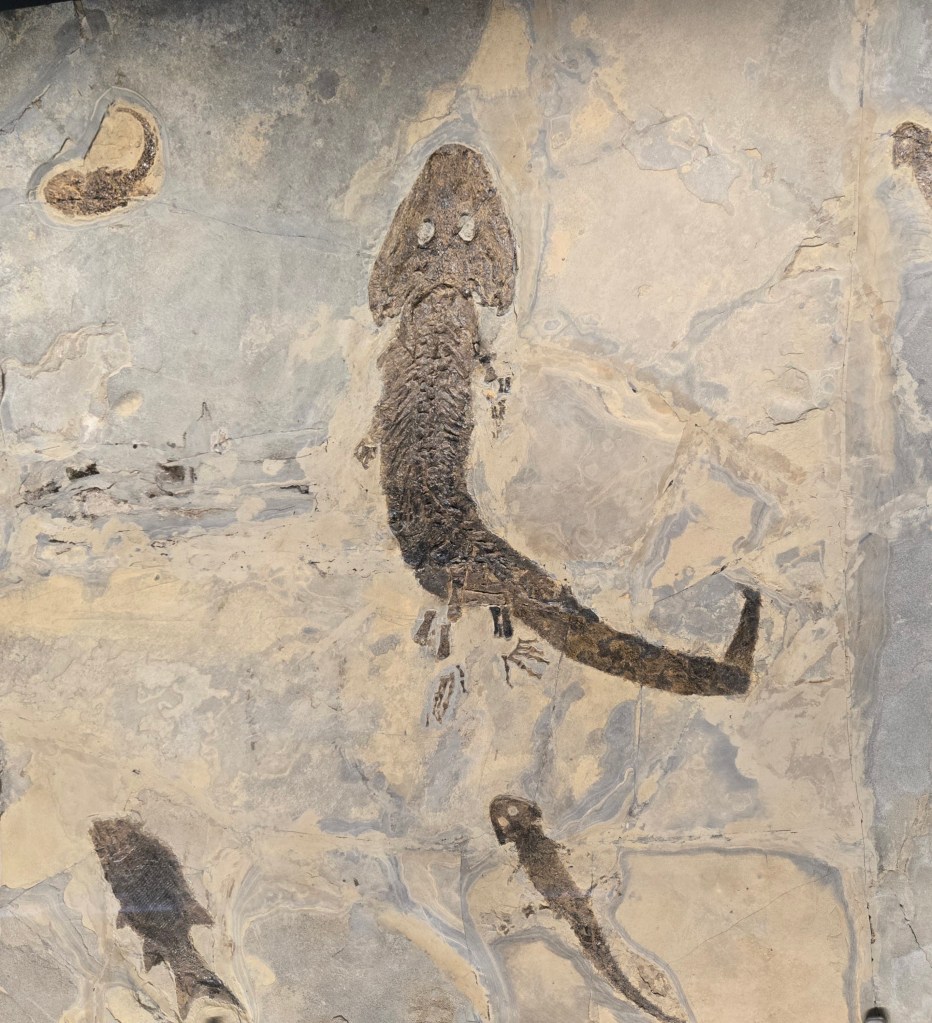
Evolution describes how all animals on Earth today slowly evolved from common ancestors over millions and billions of years. Once upon a time we were all tiny single celled organisms floating at the bottom of the sea, then we became fish, then we became walking fish, then we became mouse-like things, then monkeys, and finally evolved into humans! All of these different animals are our ancestors and, since the evolution of bones and shells around 400 million years ago, their bodies have been able to preserved through time. We find them today inside rocks and mud in the form of fossils, which is exactly what this exhibit focuses on.
Fossils come in many shapes and sizes, the image above shows a lizard like creature along with some fish with part of their dissolved body and the outline of their bones still visible. Other fossils can be in the form of shells, or even fully formed skeletons such as…
Dinosaurs
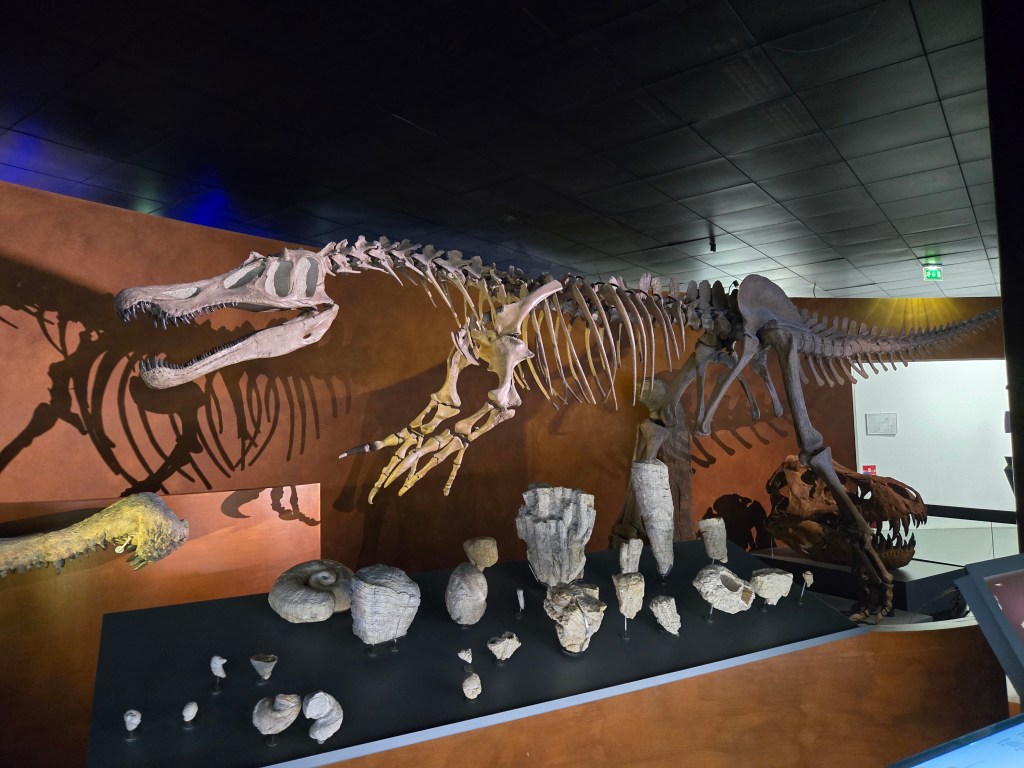
Dinosaurs were giant reptiles that roamed the Earth millions of years ago. Despite them being reptiles however, they are actually more closely related to modern day birds like chickens; so much so that many modern day paleontologists (Fossil scientists) think that dinosaurs might have had feathers!
Dinosaurs are actually a relatively recent discovery, first being identified in 1824. Before that the giant bones that were found were thought to be of an ancient race of human giants! Since then, hundreds and thousands of different dinosaur skeletons have been dug up all around the world from Pterodactyls to Velociraptors, Mosasaurs to…
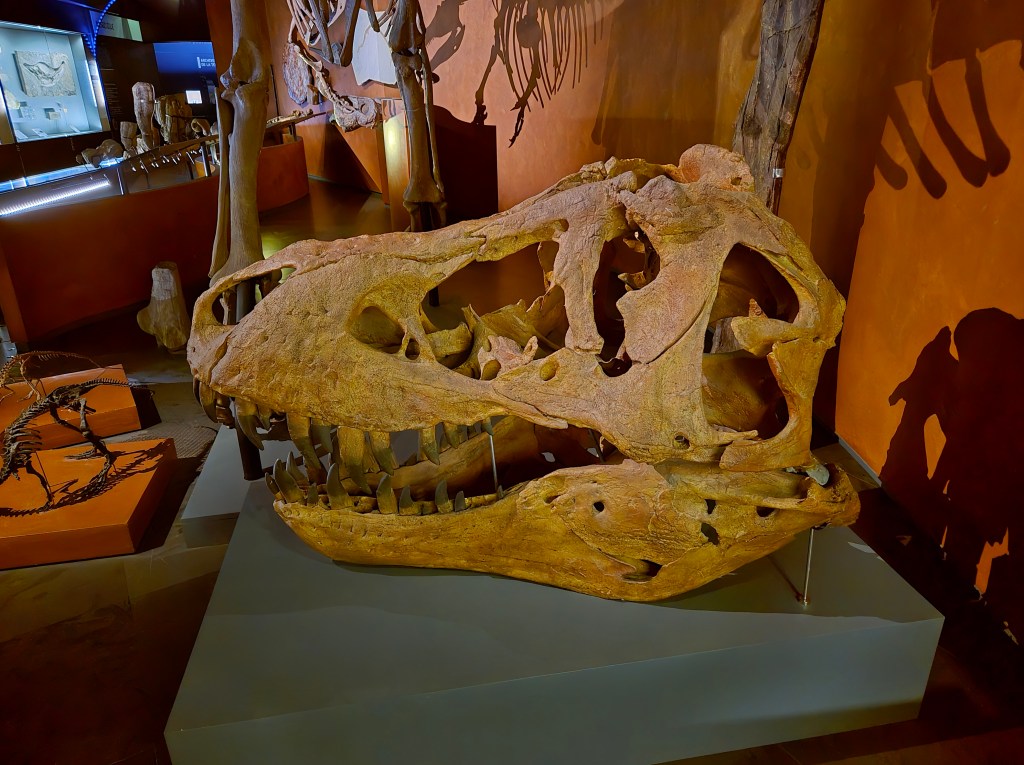
T-rexs! I don’t think I’ll stick around to see if this one moves though on to the next exhibit!
Important Edit: I’ve been informed by some experts that Pterodactyls are not dinosaurs, I can only apologise for this error! Pterodactyls are in fact Pterosaurs which are a seperate branch, there’s always something new to learn!
Something Cool: In my research I found this helpful map of all of the fossils that have ever been found. Check it out: https://paleobiodb.org/navigator/
Life Functions of Organisms
This is the final of the permanent exhibits here at Toulouse, don’t worry though there’s still more to see after this! This exhibit covers anthropology type objects, showing the evolution of humans and their use of tools and objects.
Humans, in their current form, have been around for about 20,000 years and in that time we’ve made great strides in our abilities. Over the years we have developed tools, religion, machines and society that have allowed us to go from cold damp caves to flying amongst the planets! I think it’s quite a brilliant way to end the main exhibits of the museum. First here’s the incredible planet, life, and the animals, and then here’s the most incredible thing of all: people!
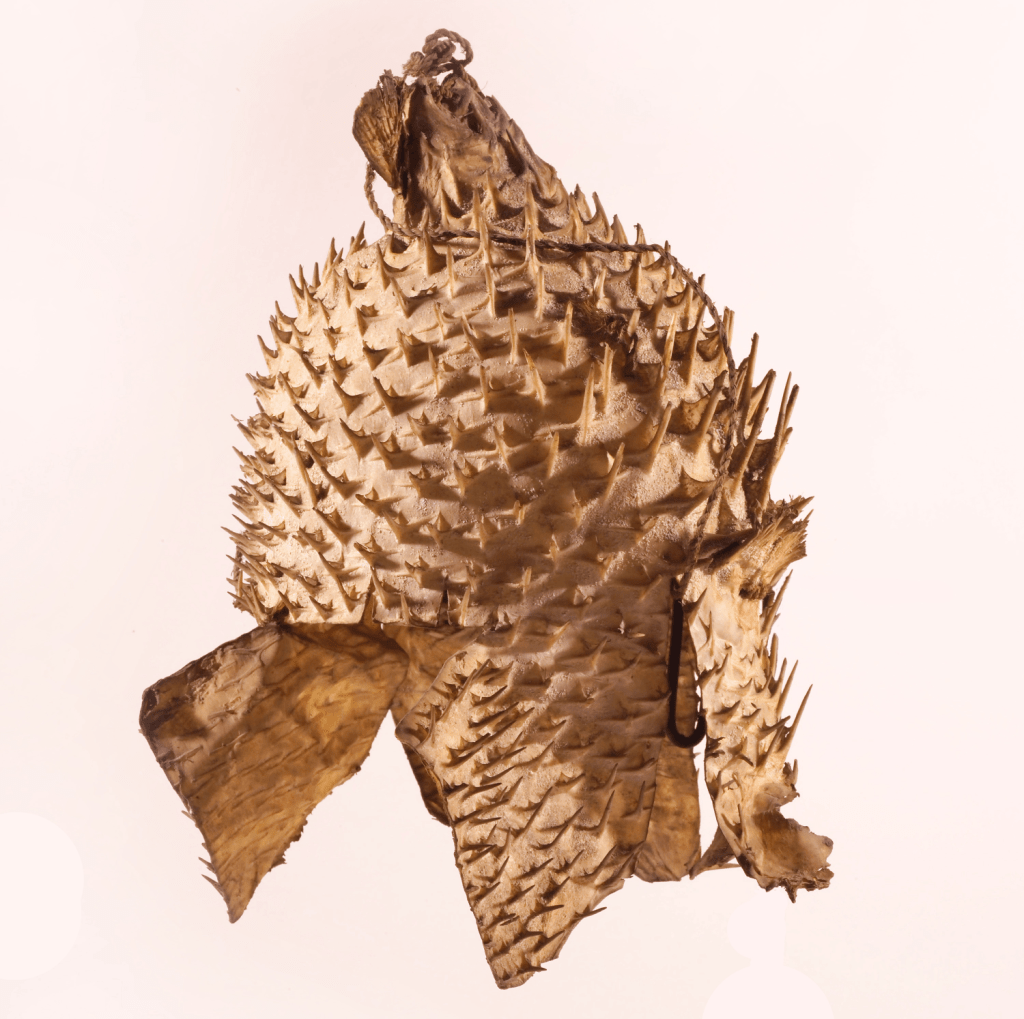
The exhibit housed many different items, from clothing like coconut armour and boots, to tools like spears and hoes. Many of the more religious items came with stories about the explorers experience with the culture in which the item is from and what kind of rituals would be performed.
I couldn’t get any good pictures of the items in the exhibit here due to the odd lighting they had in this room, but I’ve put a picture of the coconut armour below which I managed to find on the museums website!
Geants
The final exhibit I saw on this day, was called Geants, the French word for Giants. This highly artistic exhibit has numerous huge paper models of some of the largest creatures to have ever existed on Earth.
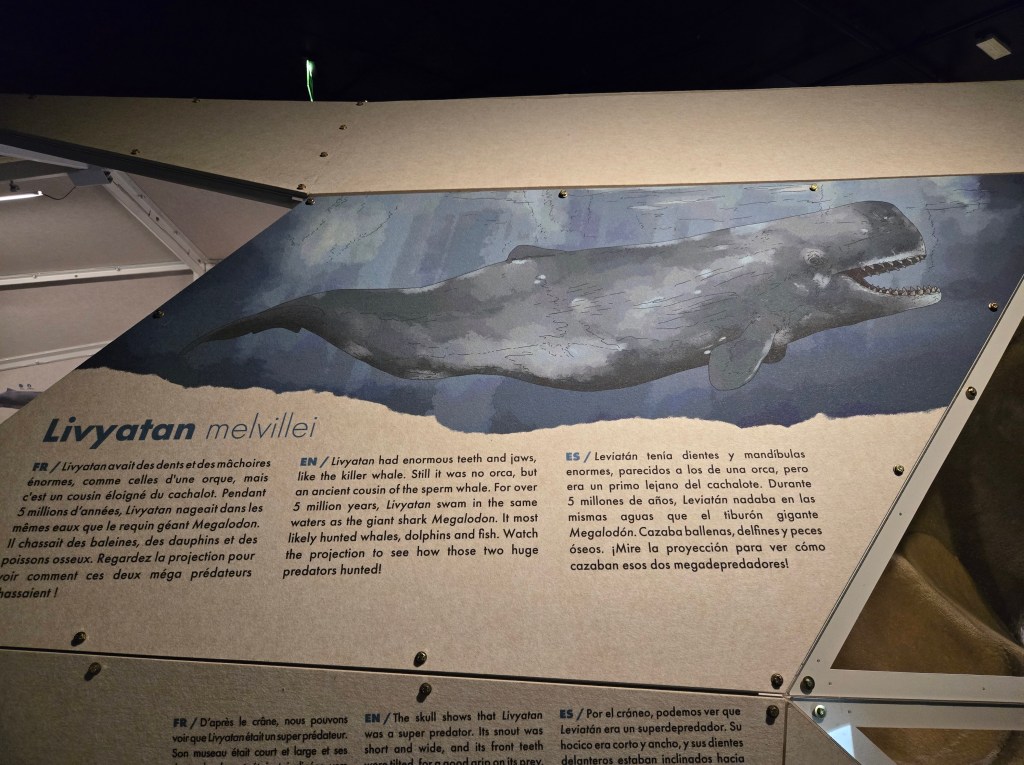
There was a Leviathon Whale, a Titanaboa Snake, a giant Silverback Gorilla, and a Mammoth! Amongst the information placards was more information about other humungous creatures such as the Megalodon Shark and the Mosasaur! They even had the jaw bone of the aforementioned Leviathon Whale, it was nearly three times the size of me so it’s fair to say I wouldn’t have stood a chance against it.
Due to the ginormity, it was near impossible to get good pictures of the exhibits here, and the exhibit has now sadly closed! The museum is constantly doing new temporary exhibits though so if you decide to visit yourself the chances are there will be something brand new to see!
As for now though, I have reached the end of my time here at the museum. It was truly an excellent visit and there was so much to see, much more than I was able to show you here. I’ll definitely visit again, maybe whilst I’m still here in Toulouse for the next few weeks, but for now I’m off on different adventures, even on that day I went to other places!
I hope you learned something interesting today, and maybe feel like checking out the museum near to where you live! If you do leave a comment below telling me all about what you saw I’m fascinated to hear about it all.
Bye for now though,
Cassie

Leave a comment