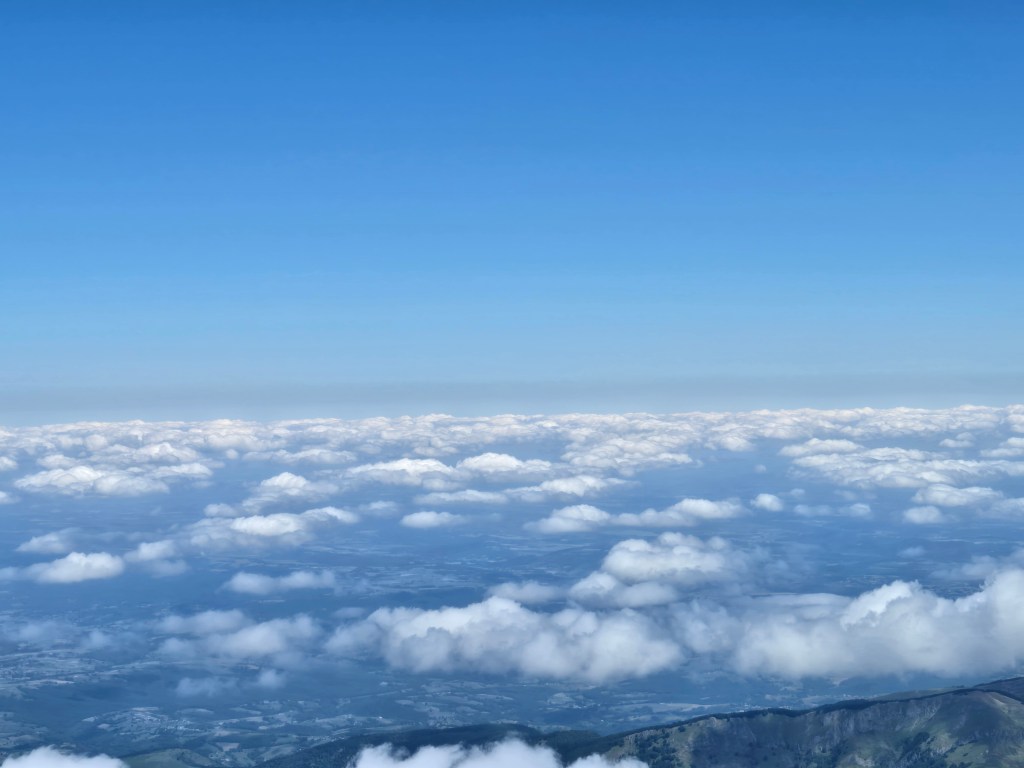
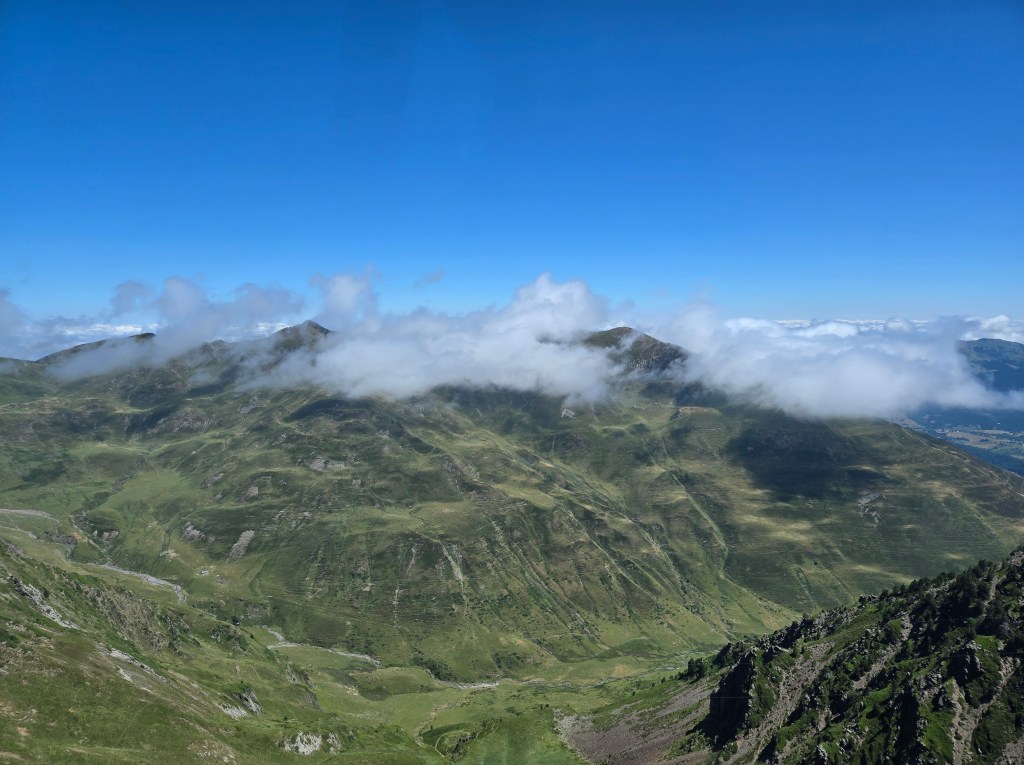
Recently, as part of my work here in Toulouse, I was afforded the opportunity to visit the Pic du Midi, a mountain in the Pyrenees which is the host to an observatory. The Observatory sits right at the peak, two thousand eight hundred metres above sea level (that’s about a third of the way up Mount Everest).
Whilst I will definitely write about my entire experience up the mountain, it was whilst I was exploring the facility that I came up with an idea for a new Sunday School lesson, thus here we are.
So today, I’m going to be teaching you about the Effects of Altitude, how being high up on a planet can affect not just you but the world around you also. So let’s get stuck in!
Some basics
To start off, we’ll need to define by what is actually meant by altitude. Here on Earth, we measure altitude by how high above sea level you are, but the sea level is constantly changing with the tides, and thanks to global warming the global sea level has actually risen by about 20 cm in the past hundred or so years. To accomodate for this, scientists have been taking the average sea level at numerous points all around the world for decades and using these to calibrate our instruments.
With our reference point, we can measure how high up something is on land by using topographical data, meaning literally measuring how much higher one point is compared to a point say a metre to the South. Do this for every point around the Earth and you eventually create a massive picture and can find out how tall things like buildings, or hills, or even mountains are compared to sea level.
Once we knew how high we were, we could start seeing the effects on our environment as our altitude changes.
Air Pressure
Our Earth on which we live is large, spherical and dense rock. It has a huge gravitational field that pulls us, our objects, and even the atmosphere we breathe down to the surface. This pulling of the air down to the surface creates what we know as air pressure and it’s vitally important for understanding the rest of the effects.
Say we drew a square on the ground that is 1 metre wide and 1 metre long. Now imagine the confines of that square extended all the way up into space, within this column there would be a large amount of air all trying to push its way down to the surface to be closer to the Earth. All of this pushing creates pressure and the combined force of the air on the square of the ground is equivalent to about three buses or 100 tonnes (101,000 Pa)! Luckily, as we all grew up on Earth, we’re used to that amount of pressure and most days don’t feel a thing.
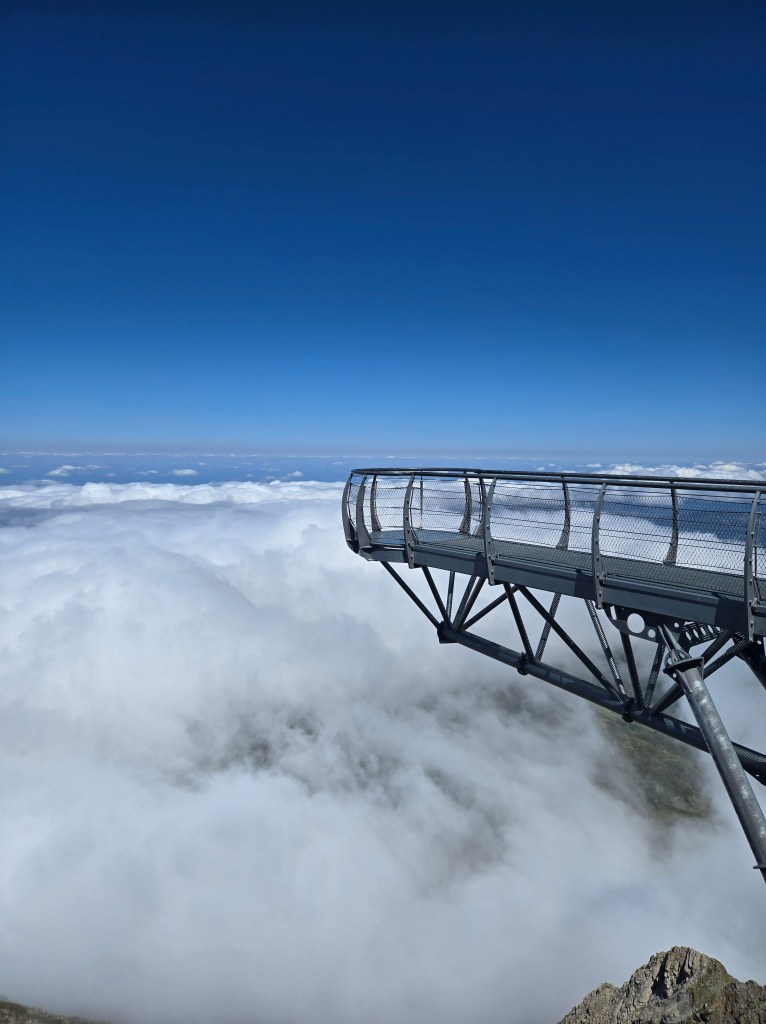
If we go a metre higher up than our first square and drew another square, there would still be a lot of air above our square all pushing down, but there would be 1 cubic metre less air than in the previous example. At this small a scale it wouldn’t make much of a difference, with the pressure only changing by about 10 kg for our square, or like leaving the three buses on top of you but asking one of the passengers to put their backpack outside. You still have three buses on you, that backpacks not doing anything!
That being said, with every metre you go up, the pressure pushing on you continues to decrease. This happens very gradually until eventually at about 5 kilometres up the pressure is now only 50% of the sea level value. A whole bus and a half has been lifted off of you!
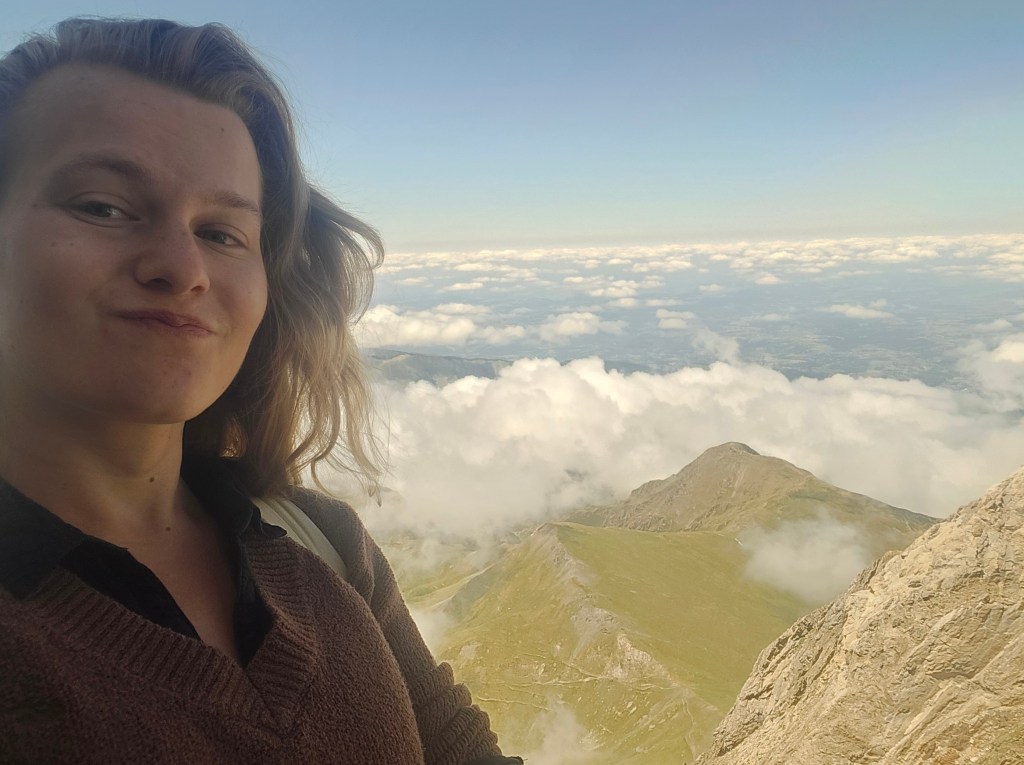
Where I was at the Pic du Midi, at my altitude of 2,800 m, the air pressure was at about 73% that of the sea level, still very survivable, but that’s not taking every other factor into account.
Air Density
As there is less air above our cube pushing down on it, the air is a little bit more free to travel around a bit. The Air density decreases at about the same rate as the pressure, meaning I was only breathing in about 73% of the air I usually do up my mountain, still plenty to be surviving by but not somewhere you’d want to be for an extended period of time.
Eventually, the air density decreases to impossibly small values as you get closer and closer to the boundary with space, however space itself is not a vacuum as many people think! Instead all of the gases and air in space are so incredibly undense that it may as well be a vacuum and it’s much easier to treat it as such!
Temperature
The main thing that is very noticeable with high altitudes is a massive drop in temperature compared to what it is at sea level. This temperature drop comes with the drop in air density! Heat, as we know it, comes from the sensation of particles colliding with our skin. These particles get their energy from heat sources like the sun often in the form of kinetic energy, they collide with us and transfer a lot of that energy to us, warming us up!
On cold days, these particles dont have much energy to give out and so even though they collide with us it’s much less frequently and with much less energy. Something different happens at high altitude, the particles are often still getting the same amount of energy from the sun, but at that 73% density it’s much less likely that theyll collide with me. I’m only being heated about 73% as much as usual and so I start to get colder and colder!
Luckily at the Pic du Midi, there are large indoor areas to explore which have their own heating, and I wrapped myself up warm in preperation for my trip, so I’ll be able to survive the mountain climate easy peasy!
The Sun
Just because it’s cold, doesn’t mean the Sun isn’t working it’s magic on us. Our ball of fire is constantly bombarding us with radiation no matter where we are on the planet. When you’re high up though, it’s actually much more dangerous!
At sea level, there are many layers of clouds above you, producing a protective layer shielding you from the more harmful rays from the Sun which can damage your skin. That being said on especially sunny days those rays can still get through, so make sure you’re wearing your suncream!
When you are at high altitudes though, there are not very many clouds between you and the Sun, those harmful rays aren’t being stopped nearly as much and are now directly impacting your skin. It’s incredibly common for people to get sunburnt or worse when they are high in the mountains because it can happen at much quicker intervals than when you are lower down. People have even been known to get sunburn whilst on Aeroplanes just through the window!
I myself was a bit red in the face when I got back from my trip, despite all my precautions and inside time, I was no match for physics!
Some Interesting Differences
Quite a lot changes because of all of the differences in environment when you’re high up. Did you know, for example, that at my altitude water would boil at about 90C instead of 100C just because of the lower pressure? Also, the lack of Oxygen up here means that fires burn much more slowly which isn’t great if I was in desperate need of warming up!
The main things to be worried about are the effects on the Human body! I’m breathing in less Oxygen so my body isn’t able to produce as much Haemoglobin as usual. The body is amazingly able to adapt to this and pulls in lots of reserves from around the body so that I can survive okay. In fact there are some communities around the world that have been genetically altered due to having lived in mountainous regions for hundreds if not thousands of years! Fascinating!
Things like Altitude sickness are also important to keep in mind though, the symptoms can start to occur when you travel above 2.5 kilometres, but it also depends on your body chemistry. Common symptoms include headaches, dizziness and nausea, so if you travel to high altitudes and start to feel any of these make sure to take active steps to inform others and get yourself to a safe location!
The Human Limit
There comes to a point where there’s only so much that a human can actually do to survive. Among mountaineers, this is known as the death zone (cheery) and is found at about 8,000 metres above sea level, so I’m completely fine where I am just below 3,000. At this elevation, there’s no chance you’d be breathing enough Oxygen to survive, the air pressure would be about 1/3 of that at sea level and the air density would be so low that you’d be freezing. Your chances of survival would be impossibly low.
The changes to the environment due to altitude are nothing to take lightly even if it’s only a few thousand metres. Always make sure you’re taking the proper precautions, and especially make sure your with someone you trust. People aren’t themselves on the mountains…
The Scientific Department
Anyway, once we figured out how things changed with altitude, we began developing instruments that could measure these changes and thus give a pretty accurate idea as to how high you are. These are called Altimeters, and there have been many different designs over the years.
The first design was a pressure altimeter. As mentioned, the air pressure decreases with altitude, so if you have a device that can measure air pressure, you can find your altitude! Old altimeters used sealed compartments of air that would expand or contract depending on the pressure outside, how much it changed by would then be fed into the meter to give the altitude. These altimeters aren’t always entirely accurate however, changes in pressure aren’t exclusive to alittude changes, things like weather or nightfall can change the air pressure drastically also which will disrupt the measurements.
Other altimeters include radar and lasers, these are often used on aircraft who shine the lasers at the Earth and time how long it takes for the light to return. This can then be used to calculate the height of the aircraft above the surface.
With our modern technology, things like altitude can be found via GPS. The many satellites your electronic devices connect to are able to calculate your altitude from the angle at which the signal reaches them. This kind of altitude monitoring is used in nearly everything that needs it in the modern world!
With that, today’s lesson has come to an end. I do hope you learnt something interesting about the effects of altitude, especially when it comes to keeping yourself safe when up in the mountains!
I’ll have my writing about my full trip to the Pic du Midi up shortly so I hope you are looking forward to hearing all about it.
Until then, wrap up warm!
Cassie


Leave a comment