
Carcassonne, a city in the French south known for it’s historic medieval walled city and the world renowned board game based around it. Is there more than meets the eye within it’s ancient walls though? This Bastille day, I set out to the city to find out just how incredible this historic town really is.
The More Modern side of Life
Owing to my ongoing studies with the French Space Agency, I live only an hour away from the city of Carcassonne by train, and even better, I can get some incredibly cheap trains thanks to my youthful age of 24! So after scraping together the cents for my 1€ ticket, I hopped onboard the 9am train out of Toulouse, and out into adventure!

Stepping off the train into the French countryside, I was immediately met with an old friend. The Canal du Midi, a man made water feature that had followed me from Toulouse. The canal passes through Carcassonne as it snakes its way to the Mediterranean, and apparently it would take me about a day and a half to walk all the way along it back to my lodgings. So I think I’ll stick with trains!
Across the bridge and I found myself in Square André Chénier, a popular spot named after the French revolutionary poet who used to stay in the city as a child. Here in the square, preparations were being made for the Bastille day celebrations that were to take place later in the day. Large stages were being set up and decorations could be seen on nearly every building.
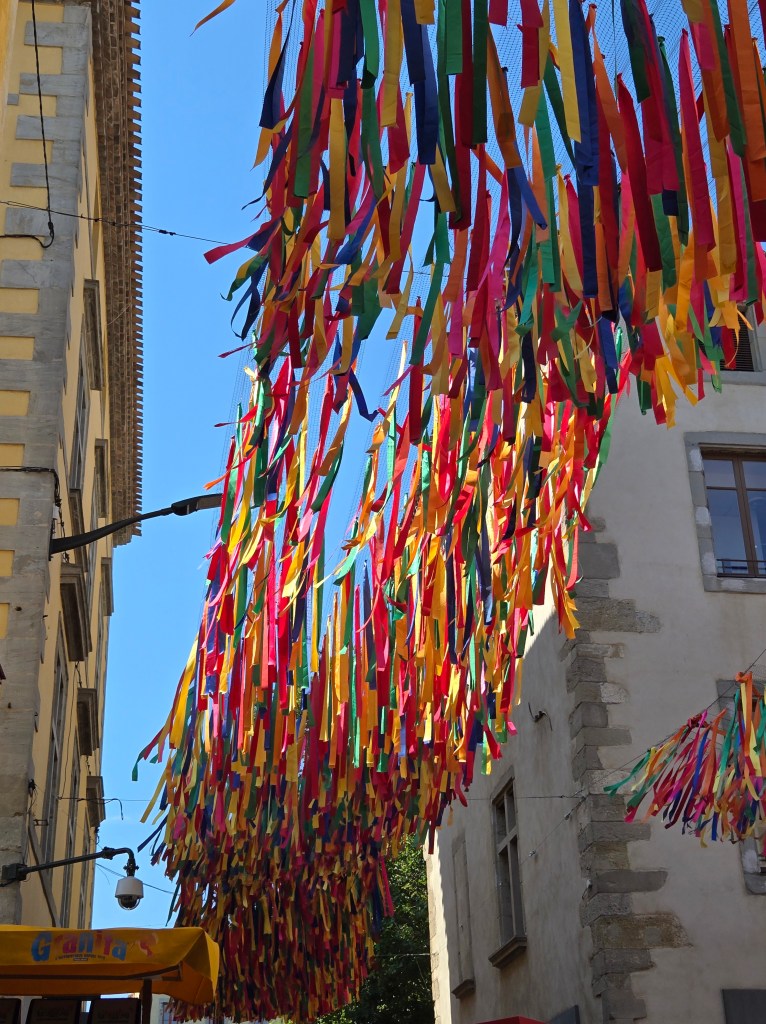
Heading down the Rue Georges Clemenceu, I soon met up with my friends and we began to wander the city streets together. I mentioned this in a previous posting, but I was truly infatuated with the street-spanning ribbon decorations we could see across the town. Were they for Bastille day? Or just an intriguing way of making the town more lively? There are similar sorts of decorations to be seen in the centre of Toulouse so perhaps it is a French thing? Whatever the reason, they are beautiful things that I hope spread further around (Leicester could do with something like this!).
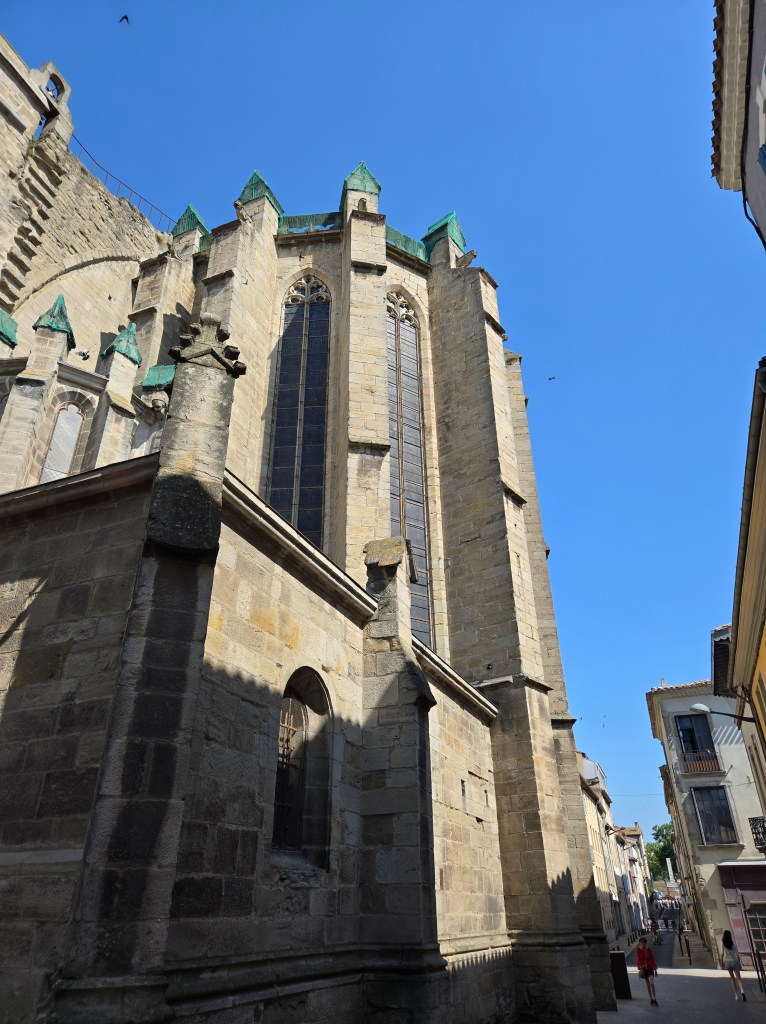
As with most old towns, the best places to see are the churches that often have hundreds of years of history. Sadly, as it’s Bastille day, most of the churches in this part of town were closed to the public, but they can of course still be admired from the exterior. Additionally, as this was once a Roman town, there are many old statues and fountains that either date back to, or reference this great chapter in the city’s history. In the pictures below, the left shows the Church of Saint Vincent of Carcassonne (built in 1247) and on the right the Fountain of Neptune (built in 1675).

After this we headed to the main street to watch the Bastille day procession, but as I’ve already focused on the celebrations of the day in a previous post. I’ll skip ahead to some more of our explorations of the city.
Losing Yourself in the History
Despite it’s blocklike layout, we found the city mildly difficult to navigate, that coupled with my tendency to want to look at nearly every building we walked past meant I was often found trailing behind my friends. For today’s adventure I decided to do things slightly differently from usual. As I often travel to these places by myself, I tend to do my research beforehand, find all the best places to visit, and plan a walking route beforehand. Carcassonne, however, was my friends idea from the start and I was simply invited along. I decided to leave the plan for the day in their hands and simply sit back and let the adventure find me!
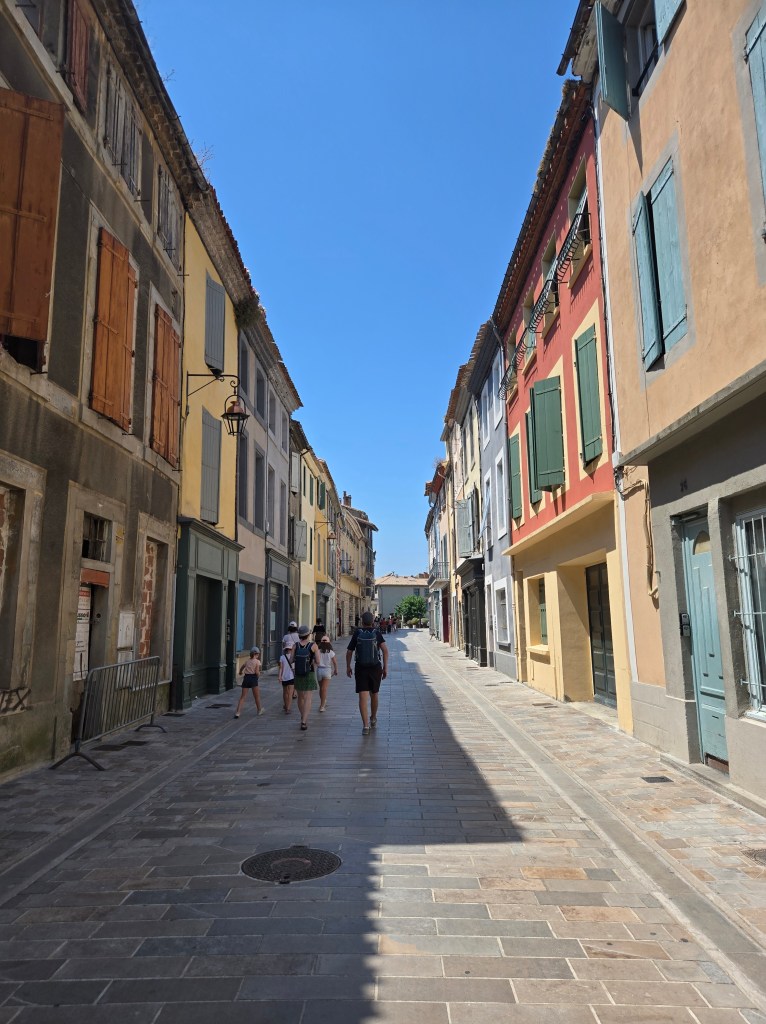
Before long we made our way to Le Jardin Enchanté, a rectangular garden found quite centrally to the overall city. Here we came across the first in what would become, at least for me, a bit of a scavenger hunt around the city…
Dotted throughout Carcassonne are sculptures by French artist Richard Orlinski. These large animal figures are designed to stand out from the classical French architecture they’re found in the presence of and they certainly are eyecatching! I was only able to find three of the statues on our touring on the day, so according to the office of tourism there was another hidden somewhere that I missed! I guess I’ll have to warrant another trip to find the last one.

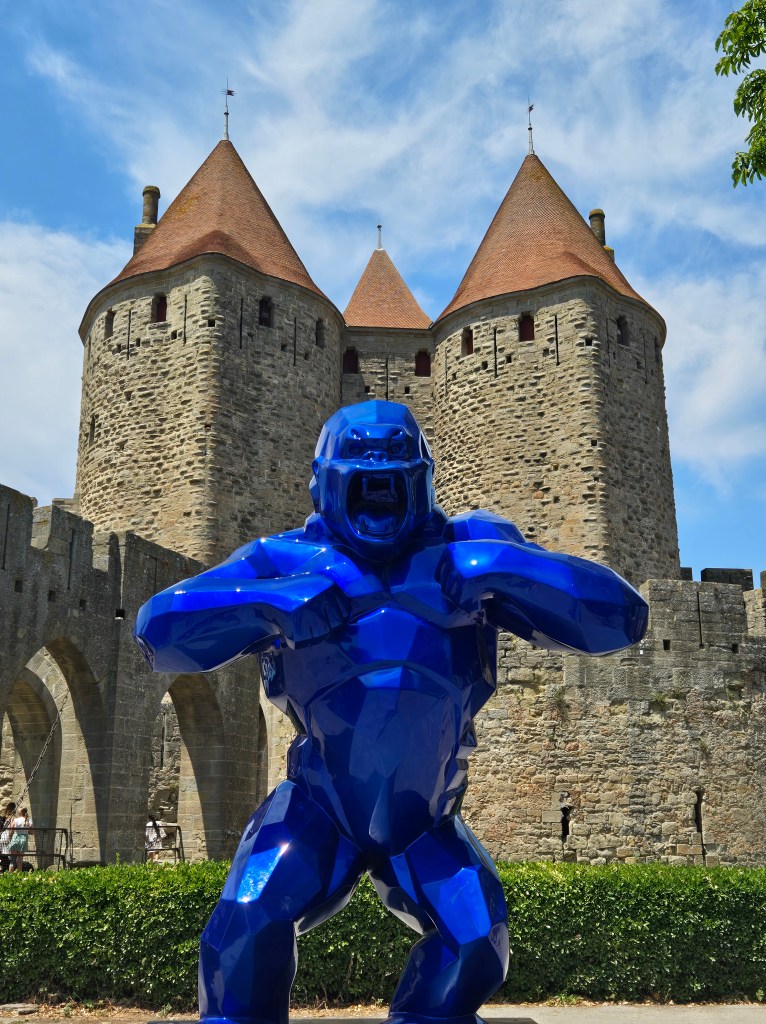
Finally, the walled city came into view, the classical medieval architecture against the French summer sky was incredible. Viewing it from a distance however didn’t do it justice, so we headed over the Pont Vieux and into the old town part of the city.
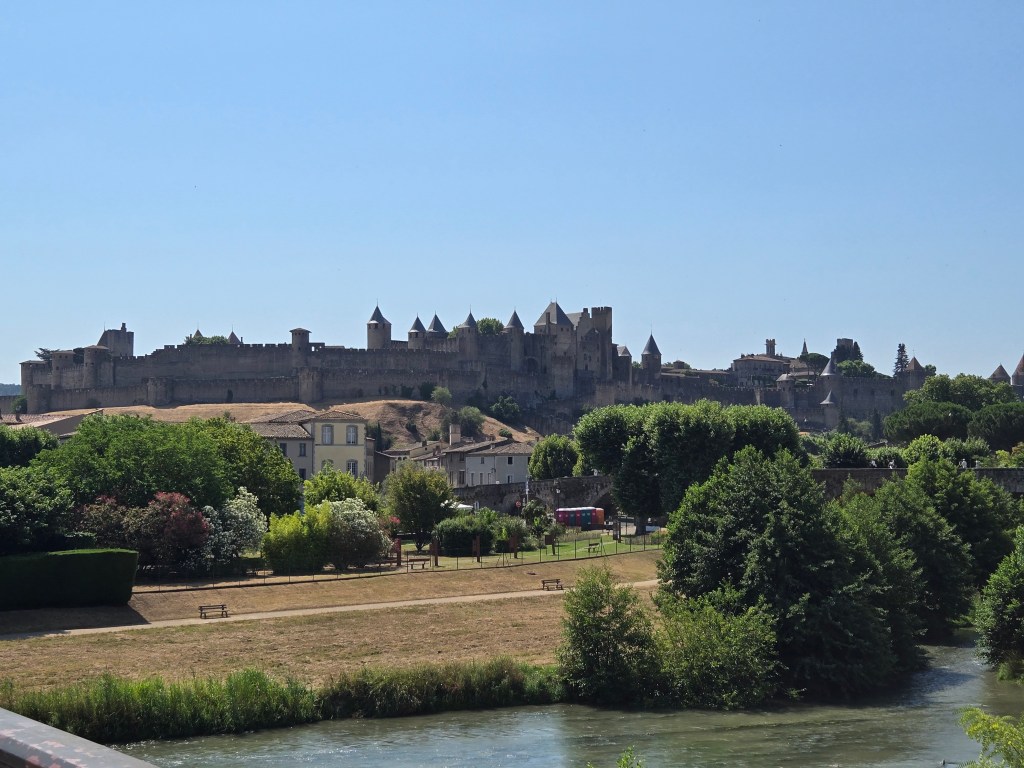
Some mildly steep cobbled streets passed underfoot, and soon we were outside the wall of the city, so inpenetrable it took us nearly ten minutes to find the entrance! We stepped through the large archway of the East gate (Porte Nabonnaise) and finally entered the walled city of Carcassone.
Within Ancient Walls
Originally founded about 2,500 years ago, the city of Carcassonne started out as an ancient settlement until in the 3rd century BCE it was conquered by the romans and built into a more substantial fortified town. Over the centuries the city was a near constant work in progress, with towers, castles, basilicas and fortifications being built and rebuilt throughout the land.
The city has seen its fair share of battles too. In the 12th century the city was subject to numerous revolts, and in the 13th century Carcassonne was attacked by crusaders accusing the Count of Toulouse, who was staying in the castle, of heresy. The roman foritification proved useful in providing a stronghold against the invading Kingdom of Aragon in the middle ages as well, but once peace was established between the regions the city lost it’s use to France.
Eventually in the 1800s, Carcassonne underwent restoration works after backlash against the French government who wanted the city demolished. Since then, the city has been kept safe and restored, in the modern day it is regarded as an important heritage spot and an iconic monument for France.
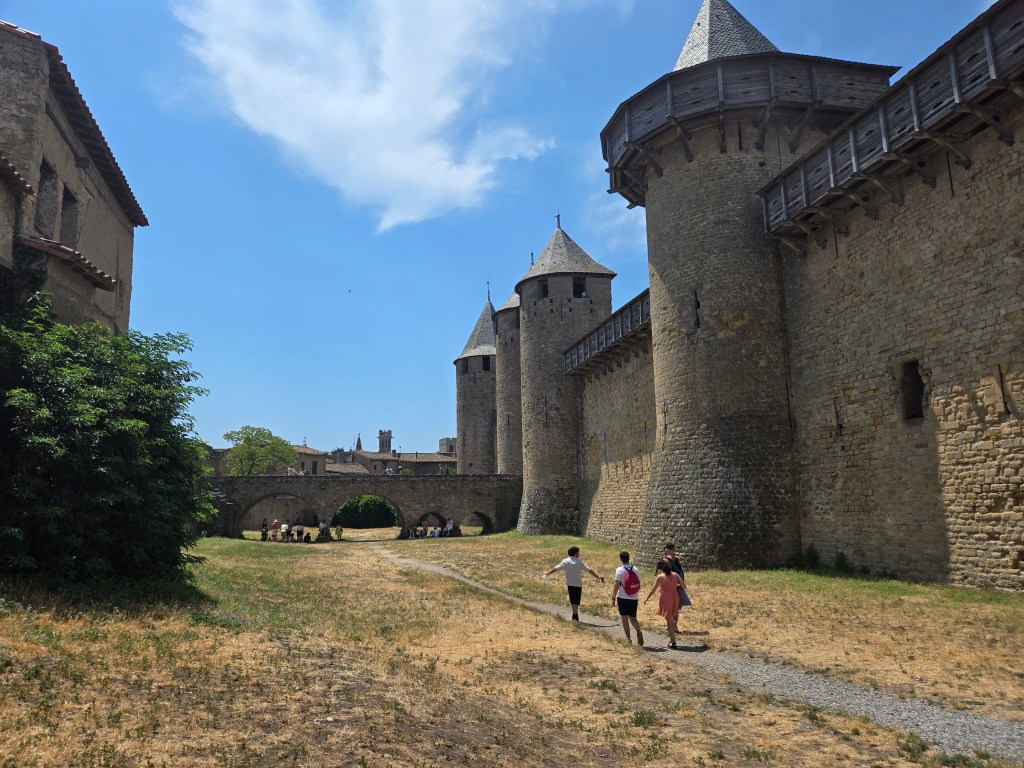
These days, the city within the walls is a popular spot for tourists, as such most of the buildings have been renovated into cafés, gift shops, and fashion stores. It makes for an interesting mix between the renaissance-esque buildings lining the streets that have bright neon signs and ice cream machines in the entranceways. The result of this is absolutely packed streets as people weave in and out of others to try to get to a shop they have their eye on or to a historical area down a side street.
The city is a bit of a maze, the streets wind and cross resulting in my friends and I feeling slightly disorientated. On our wandering though I made an internal list of a few of the most interesting looking spots.
There was:
- A Haunted House complete with animatronics,
- A Wishing Well in which I tossed a 0.10€ coin,
- A dried up Moat surrounding the inner-most castle,
- and numerous small Gardens joined onto the house housing various flowers and shrubs
Just to name a few!
The Basilica
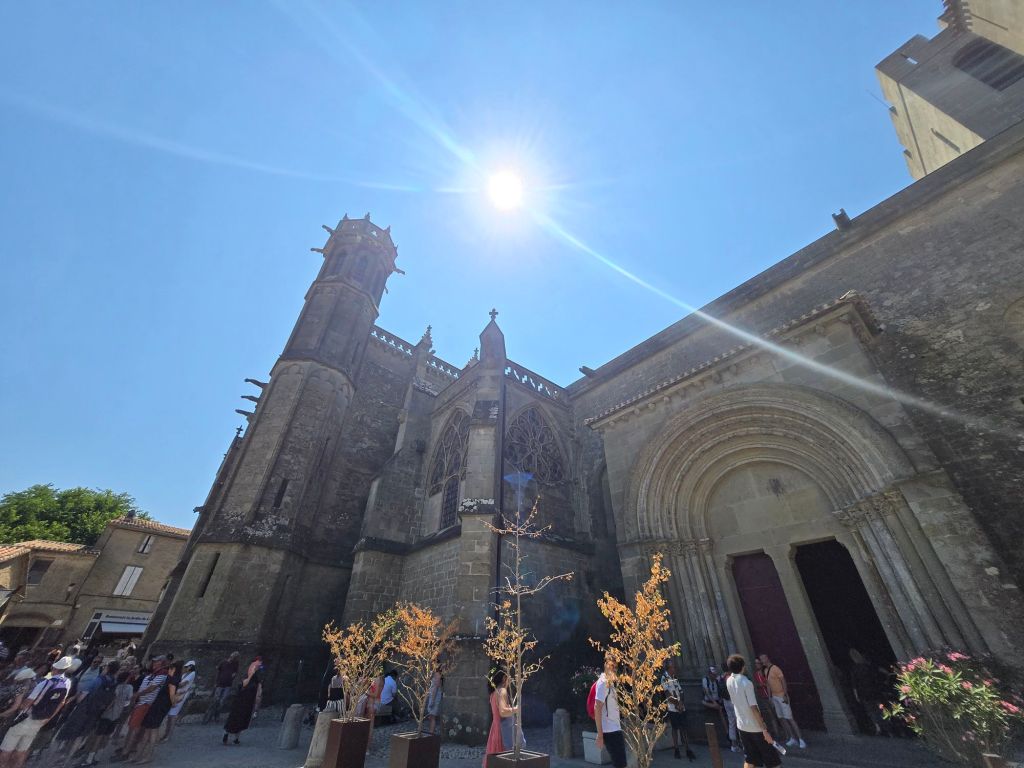
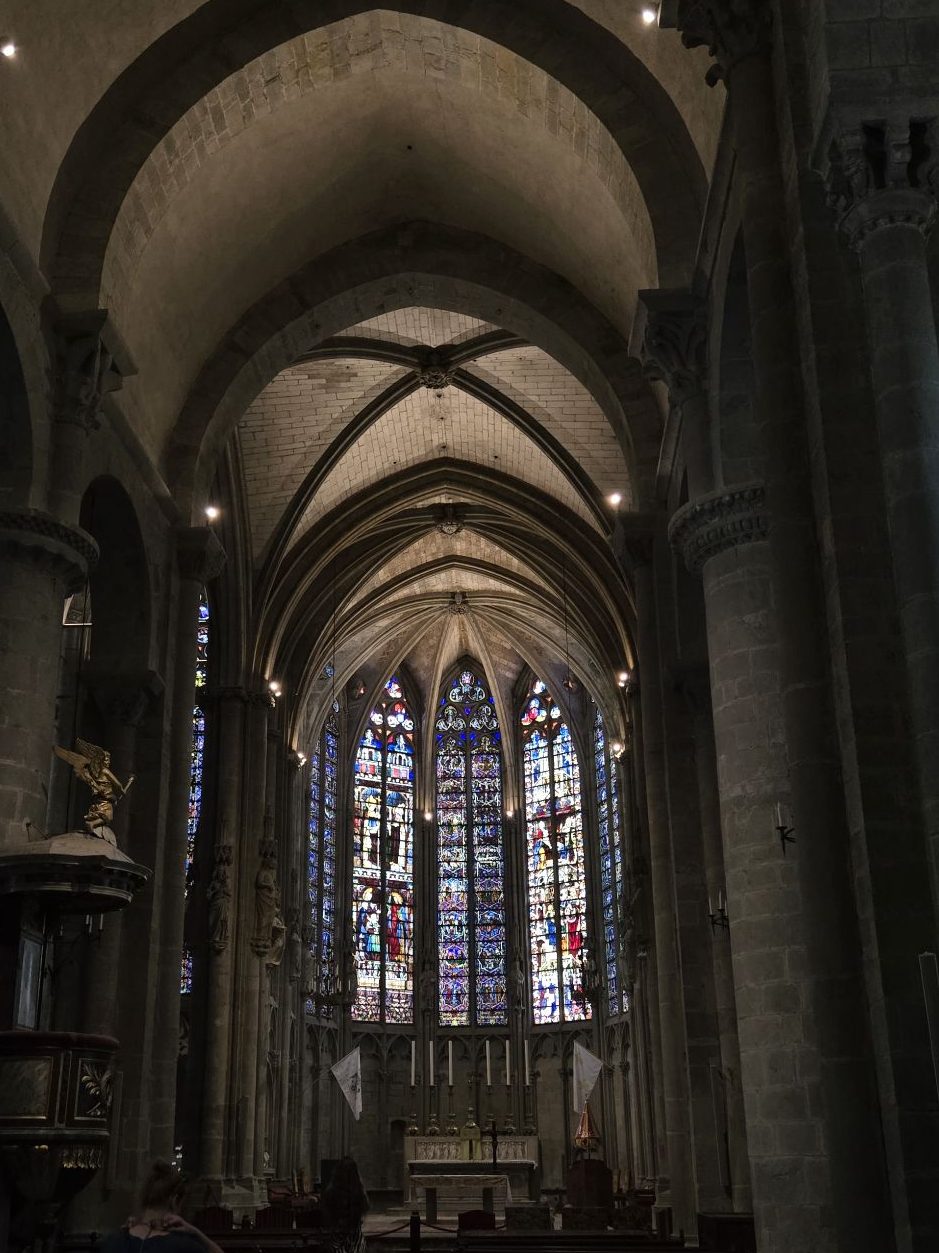
In the southernmost part of the walled city lies the Basilica, specifically Le Basilique Saint Nazarie. This large gothic style church still operates normally and we had to be careful and respectful as we toured.
At the far end of the aisle, high above the altar, was a stunning stained glass window illuminated by the bright midafternoon sun. The glass depicted classic religious images: saints, popes, cherubs, they had the works. With the light shining through, the basilica occasionally became illuminated by bright colours and mesmerising patterns.
It was difficult to drag myself away from the beauty of the basilica, but my stomach was calling, and it was difficult to ignore the call.
The Path Home
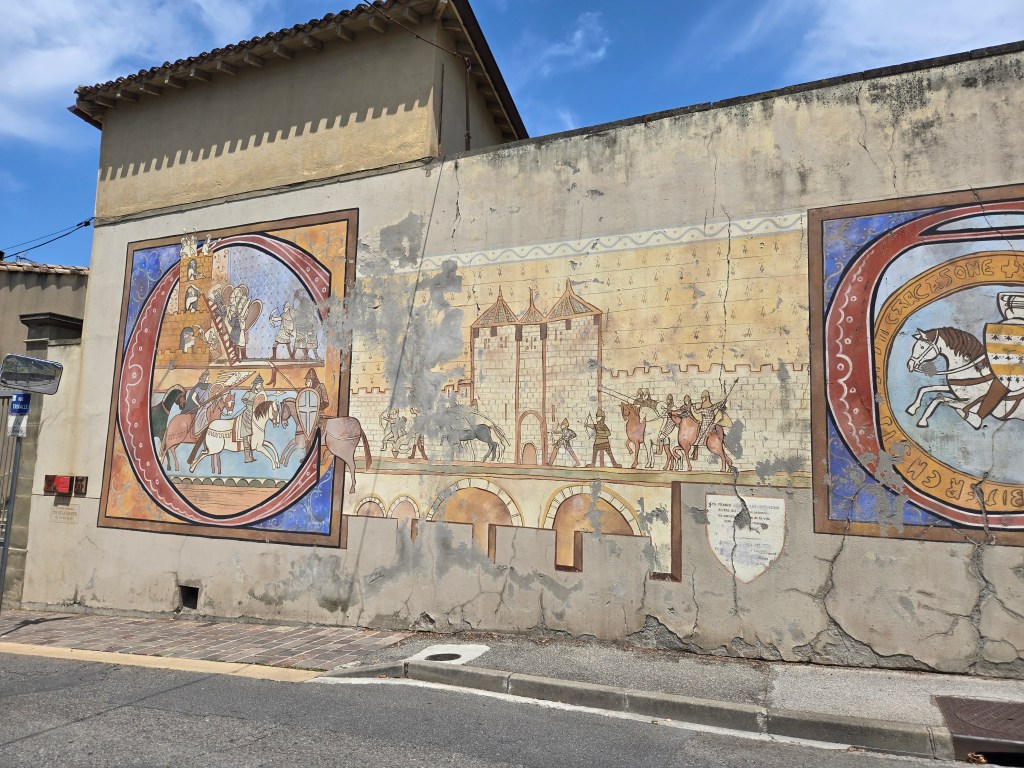
On the way out of the city, down towards the river, we passed a mural where medieval pictures filled the spaces between a giant writing of the city’s name: Carcassonne. The paintings were reminscent of old tapestries, depicting battles outside the gates, knights and kings. With the cracks in the walls and the fading of the paint only adding to the almost realism of the depiction of these kinds of tapestries.
My exploration of the ancient city had come to an end, but I am certain there are many more tales hidden within it’s walls. As I rested at the train station, I could see the many towers lining the city and pondered just how many had gazed upon it’s hardy walls desiring entry, and how lucky I had been to simply step inside the ancient castle, the famous city of Carcassonne.
Cassie

Leave a comment