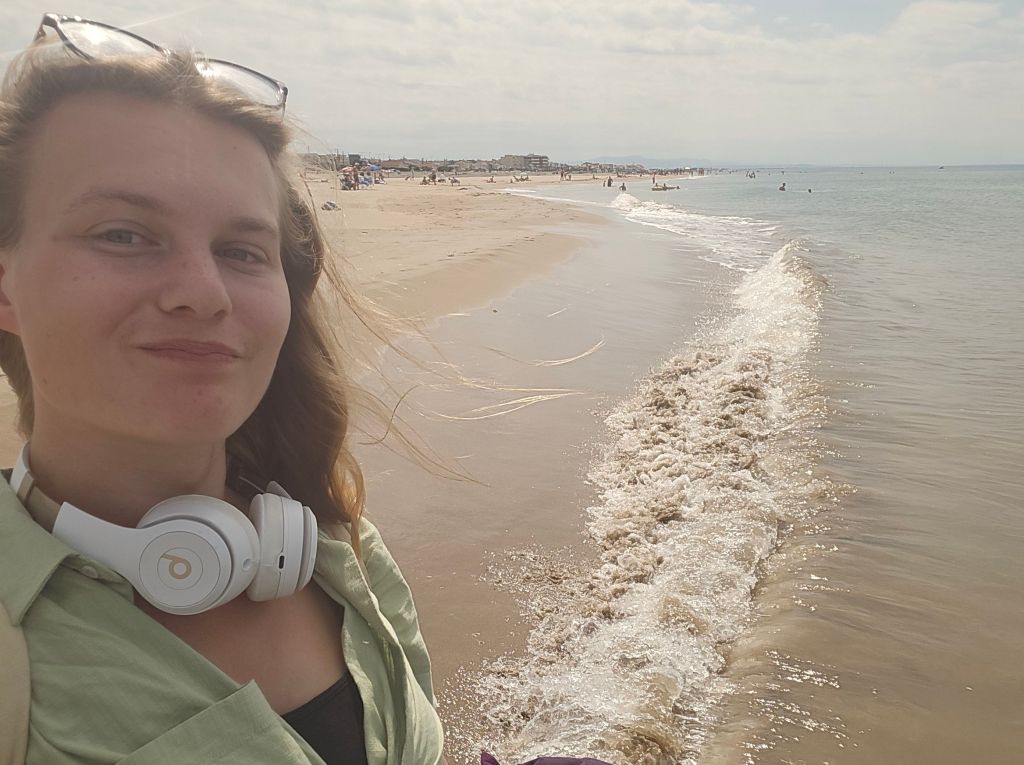
Recently I went to the beach! Whilst I have a big post coming soon about my experience with it, I wanted to dedicate a Sunday School lesson to one of the great phenomena of places like beaches: Tides!
Tides refer to the rise and fall of the sea level around the world. This is particularly noticeable at places like beaches where the rise of the sea covers more of the beach, and the lowering of the sea level reveals the sand back out. Regardless this change in sea level occurs throughout the ocean however and the effects are completely predictable. This is because the tides are caused by something very familiar to us all.
The Moon
The Moon is a large rocky body that orbits the Earth at a distance of around 384,000 km. The Moon and the Earth exert great forces on eachother, the Earth’s causing the Moon to stay orbiting around it, and the Moon’s causing changes to the rotation and, especially for us, tides! The Moon orbits the Earth with a period of about 29 and a half days, which is also the bodies rotational period, hence we only ever see the same face of the Moon. This movement of the Moon causes what we know as the phases of the Moon, as the angle between the Moon, Earth and Sun cause it to look like only part of it is illuminated.
Back to the Point
Anyway, tides! As mentioned, the Moon pulls on the Earth with it’s gravitational attraction. Most things are too attracted to the Earth to move any differently, but large bodies of water are so fluid and free that they do move. As the Moon moves across the sky into the highest point in the sky (this movement is more caused by the Earth’s rotation) that gravity starts to pull all of the water upwards, this is what leads to high tides. When the Moon moves further westwards and sets below the horizon, the water is now not being pulled up where you are, but it is somewhere else, so you get low tides as all the water moves over there.
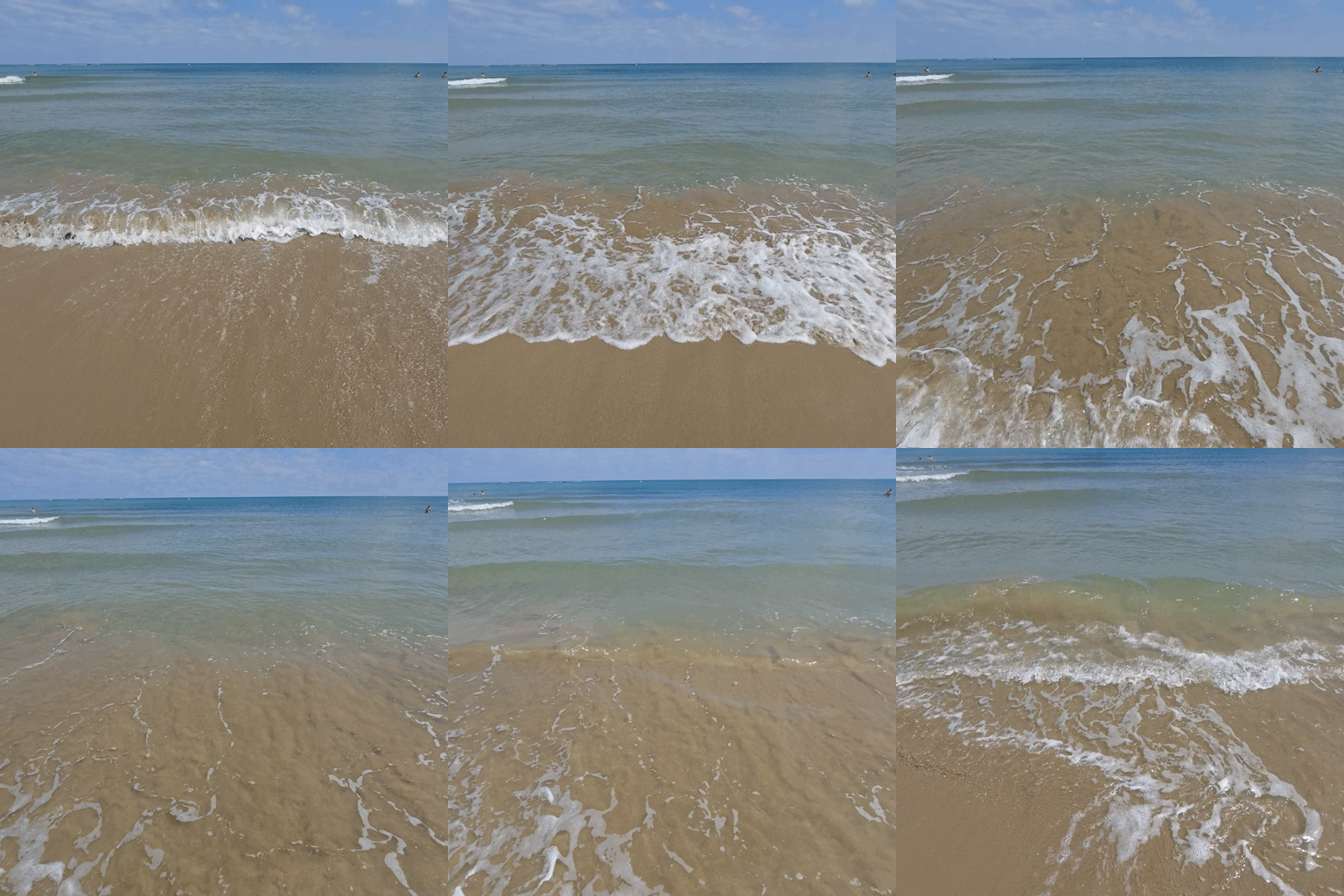
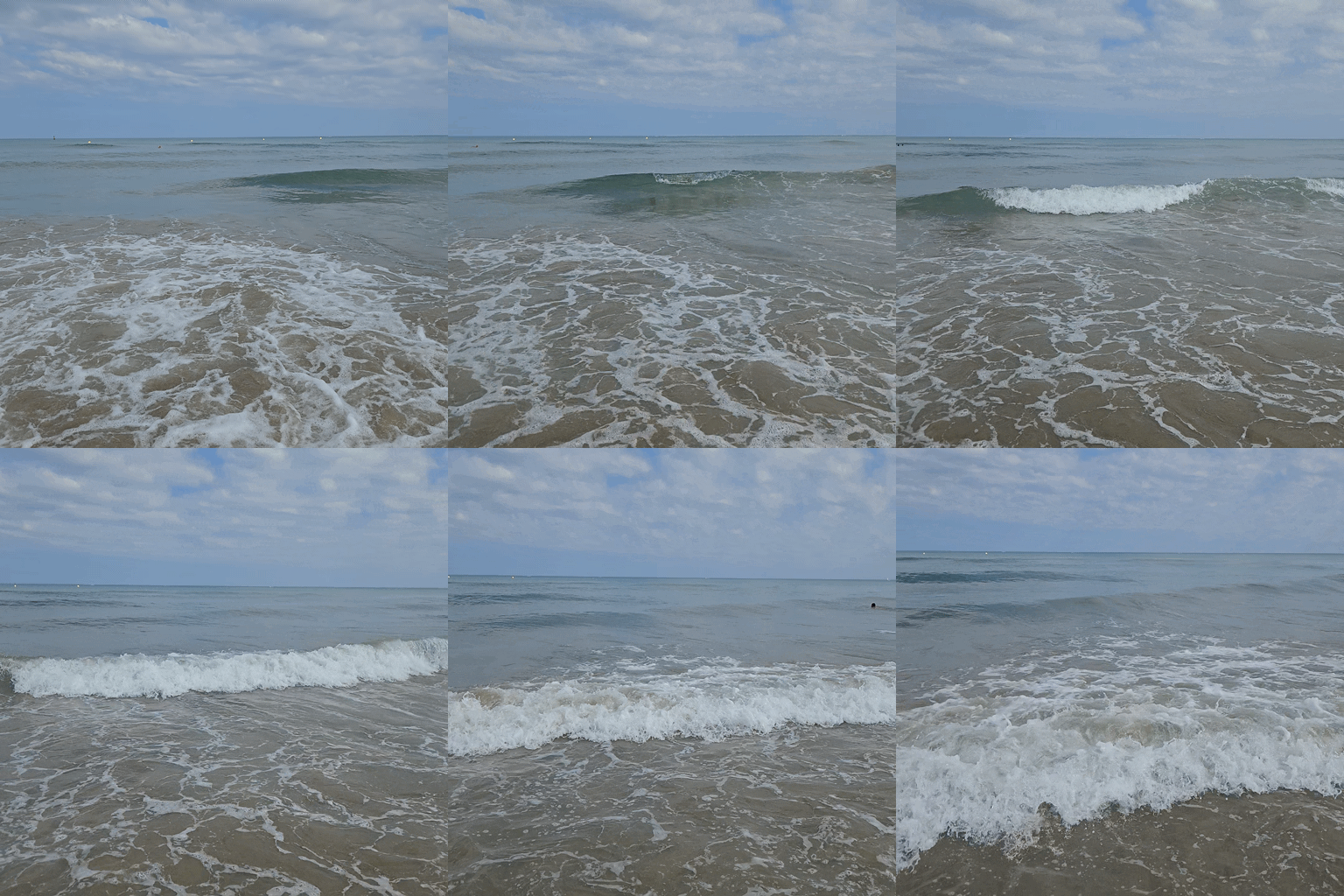
You can see this movement in the little waves you get on beaches, a proper visual of the gravity acting between the two massive objects.
An interesting thing happens when the Moon is on the other side from the sky you can see though. Due to the Earth’s rotation, a force known as the centripetal force is acting on all of the water in it’s oceans. This force coupled with the Moon deforming the surface of the water causes another high tide on the other side of the planet. Hence we tend to get two high tides and two low tides every day!
So great! If we known when the Moon is at it’s highest and lowest we can figure out when the high and low tide is. And technically you’re right, but reality is never that simple.
Things get Complicated
Whilst yes, the Moon is pulling the water up, something like that isn’t so easy to do even for something as large as our neighbour is. It takes time, and the Earth constantly fights it trying to keep the water down, that coupled with the changes in depth of water (bathymetry) around the planet creates what is known as the Lunitidal Interval.
This interval or lag can cause delays of the high tide of up to eight hours depending on where you are. It can then be delayed by a further three hours depending on the phase of the Moon. To Illustrate this I will include the Moon data and tidal data from where I am here in Narbonne!

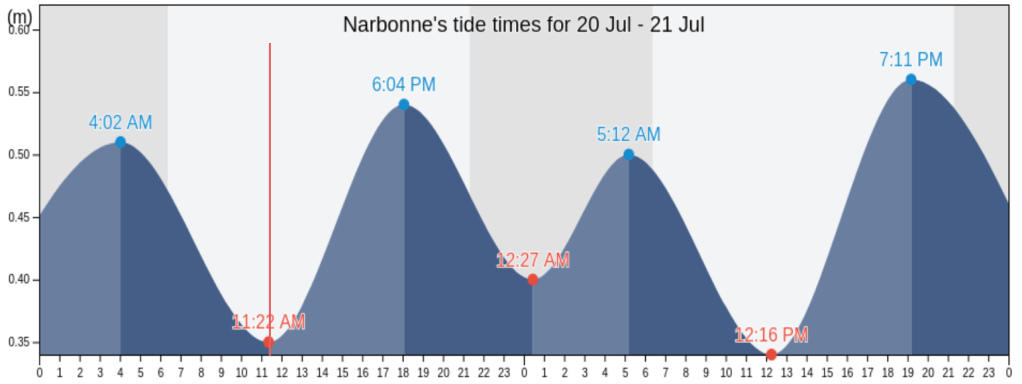
So, the Moon rises at 1:42am, reaches it’s height at about 9:30am and then sets at 5:39pm. Low tide is at 11:22am, high tide at 6pm, and another low tide 12:27am. The low tide at 11:22 is most likely caused by the Moon rise 10 hours earlier! Similarly the high tide at 6pm is from the high point 9 hours earlier and then the low tide at half past midnight is from the moon setting at 5:39pm, six and a bit hours earlier.
It is an incredibly complex system. One of the main reasons for this, is another familiar friend.
The Sun
The Sun is a huge ball of gas in the centre of our solar system. You might recognise it from the big bright thing in the sky during the day. The Sun is so massive it can gravitationally attract all of the planets in the Solar System keeping them in orbit. The gravity of the Sun also has small scale effects also though, that’s where the tides come in.
Let’s start at the Full Moon. At this time, the Moon looks to be ‘full’ because the half of the Moon that is illuminated is facing the Earth, the Sun therefore must be on the other side of the Earth, all three bodies form what’s known as a Syzygy (they’re all in a line). There are now two big pulls on the oceans from both sides of the planet, the tides are going to rise higher and sink lower than any other time of the month at this time. This is known as a ‘Spring Tide’
A similar thing happens at the New Moon. Here the Moon and the Sun are both on the same side of the Earth so we can’t see any illumination from the Moon as the illuminated half is facing away from us. Now with both bodies on the same side, the gravity adds and the tides are pulled up even higher and sink even lower when the Sun and Moon set.
The next major point is when the Moon is in either of it’s quarters, either waxing or waning, first or third. Now, the gravity from the Moon and the Sun cancel eachother out and the tides move the least amount, these are known as ‘Neap Tides’.
The tides change between Spring-Neap-Spring-Neap over the course of the Moon’s period, so there’s only about a week between each event.
At all the points between these phases of the Moon though, the gravity is all over the place pulling this way and the other. The tides don’t know what to do with themselves and the Lunitidal Interval is very varied, hence why the change earlier was so different each time as at the time of writing the Moon is in a Waning Crescent phase.
Huh?
So, tides are very complicated. But, for the most part they can be predicted by the movements of the Moon and the Sun. Old civilisations like the Vikings were able to figure this out too, and often planned their voyages for periods of time when the water would be calmer between the two Spring tides.
So the next time you’re at the beach during the Full Moon, be careful. The sea will rise higher and faster than at any other point of the month, and that water is much less forgiving than the Werewolves prowling about.
Oh I do like to be beside the seaside, Oh I do like to be beside the Sea
Ta-ta
Cassie


Leave a comment