Hello, and welcome to another Sunday school lesson. This week we’re going to be talking about something that’s very topical around this time of year, the shortening of the days, the increased lateness of the sunrise, and the earlier and earlier sunsets. Why does it happen? How do we know it’s going to happen? And how has it shaped us as a society? All that and more in today’s lesson on the Autumn Equinox!
What is an Equinox?
The Earth orbits the Sun in what is essentially a big circle, meaning the planet gets essentially the same sunlight year-round. However, the Earth also spins on an axis, and this axis is slightly tilted to the Earth’s orbit at an angle of about 23.5 degrees. So, as we fly around the Sun, the different regions of the Earth get different amounts of sunlight.
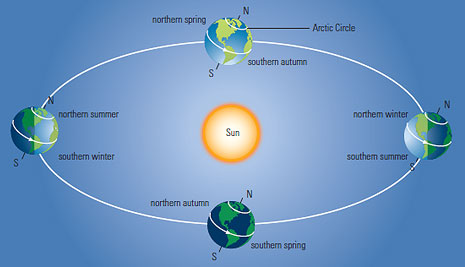
The autumn equinox is a day when the sun is directly over the equator, so the northern and southern hemisphere get the same amount of sunlight; this crossing only happens twice a year, once during autumn and once in spring. After the autumn equinox, the Earth tilts away from the Sun, so the northern hemisphere begins experiencing less sunlight and thus the nights get longer, whilst the southern hemisphere begins experiencing more sunlight and thus the nights get shorter. This continues until the Winter Solstice when the Earth is tilted its maximum amount away from the Sun and the days are the shortest.
From an Earth perspective, the autumn equinox is when the Sun passes southwards over the equator towards the Tropic of Capricorn. The other, northern tropic is called the Tropic of Cancer and if you live within these tropics, at some point in the year the Sun will be directly over you.
The equinox marks the time when the daylight time is decreasing at the fastest rate, about 8 minutes per day. So tomorrow you will have 8 minutes less daylight than you had today, but from here onwards it slows down.
The orbit of the Earth around the sun is so well understood that the exact time of the equinox can be found decades in advance. It can also be found for every other planet, all that is needed is knowledge about the orbit and the axial tilt of its rotation, and the equinox can be found.
2025’s Equinox
This year, the Autumn equinox took place of the 22nd of September 2025 at precisely 18:19 GMT. After this, Autumn has officially started in the seasonal calendar.
How do we know it’s going to happen?
These days we have computers constantly calculating the positions of the Earth and the Sun, but the equinox has been known about for thousands of years. In ancient times, over the span of many years, people realised that the sunrise always occurred between two extremes in the East. They marked the middle of these two extremes and realised that, when the Sun rose from this position, the day and night were almost exactly equal in length. This lead to the name ‘equinox’ meaning equal night.
The ancients found that the spring and autumn equinox occurred almost always the same amount of days away from each other, so this allowed them to begin creating calendars. Once again by marking the centre, the ancients created the summer and winter solstice which aligned with when the Sun was the highest and lowest in the sky.
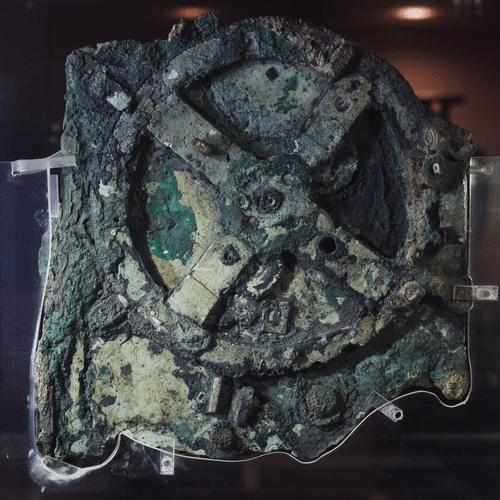
The oldest computer in the world, the Antikythera, was a machine developed by the Greeks to track the days of the solstice and equinoxes, so these days are incredibly important to our society’s development.
The Extremes of the Equinox
As mentioned, the equinox means different things depending on where you are in the world. For the northern hemisphere it means the coming of autumn, the decay of plants, and the lengthening nights, but for the southern hemisphere it means the opposite, the new life of spring and the lengthening days.
In places as far north as the arctic, the equinox marks the last sighting of the Sun for the next six months as it passes so far south the Earth itself blocks the light. Northern locations now experience perpetual night time throughout the Winter but come the Spring equinox the Sun will rise and stay risen for the next six months, so it still works out to be an even trade.
The length of the winter night is greatly dependant on your latitude; the further north you are the more night you will have during Winter. At the equinox though, almost everyone on Earth will have a day that is exactly the same length, and thus we become equal in more ways than one.
What does the Equinox mean for people?
All over the world, the equinoxes are very important days. Often Harvest festivals are held on the days symbolising the end of one season and the start of another. The autumn equinox is sadly seen as less important than the spring equinox (which often denotes the start of the year in a few calendars) but it still holds cultural significance!
- In Japan, the autumn equinox is a public holiday.
- In Korea, a three-day celebration is held every year known as the Chuseok
- In Judaism, the Feast of Tabernacles is held every year on the first full moon after the autumn equinox, which this year is on the 7th of October.
- And here in the UK, we celebrate the harvest festival on the night of the full moon which is closest to the equinox, which this year is on the 7th of October also!
So, the next time someone asks you what the Autumn equinox is, you can tell them that it means the Sun has moved southwards, the long night has fallen over the arctic, and the harvest festival is about the begin!
Class dismissed!


Leave a comment