
If I’m honest, I’ve been working way too hard lately. I love my course, and my classmates say I have way too much joy doing the assignments, but I still need to take time off from studying every now and then.
So, today I’m spending the day walking around the botanical garden near to my flat. I’m hoping to see all sorts of plants and trees so that I can fill out that new part of my website I haven’t gotten around to yet (whoops). I’m also going to draw a few of the plants I see, just don’t expect anything amazing they’re only going to be thumbnail drawings.
The botanical garden is really quite big, and they have many different types of garden scattered around. From a chinese garden, to a sunken garden, tropical greenhouse to pinetum (a fancy word for pine tree plantation), they really have an impressive collection. I’ll attach a map I found below so that you can see for yourself everything they have on offer:
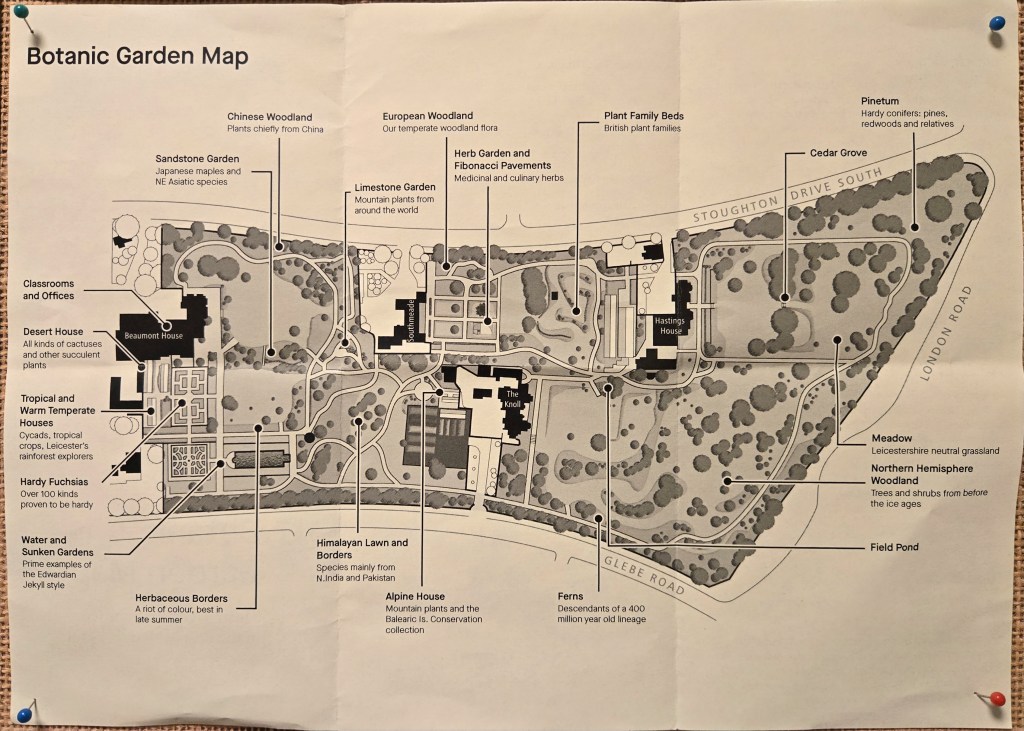
Even if a region doesn’t have a specific title, there are plenty of fauna to be found. For every plant I come across, I’ll but their name and the scientific name and a few little facts about them. The first plant I saw on my way in was a broadleaf mock orange…
Broadleaf Mock Orange – Philadelpus Pubescens
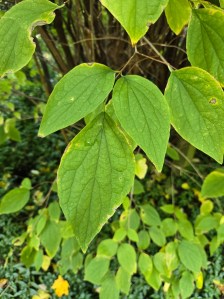
This shrub has some incredible leaves that I photographed to the right. The best time to see them is in summer however when small white and orange flowers bloom on the branches. I’m lucky I got to see the leaves when I did as it’s not evergreen and will probably lose it’s leaves in a few weeks time!
Continuing my walk around, I wanted next to find a tree in the stages of losing it’s leaves for the autumn, and luckily I found just the thing with a sugar maple…
Sugar Maple – Acer Saccharum
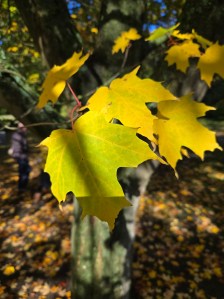
Maple trees are indigineous to north america, but thanks to some helpful people hundreds of years ago, they tend to be everywhere. Maple trees are really recognisable due to the shape of their leaves (most commonly seen on the Canadian flag) they have three main segments with spikes around the perimeter.
As you can see in the pictre to the right, maple trees are decidious meaning they lose their leaves in the autumn. First the leaves turn this goldeny yellow colour before falling. Maple trees are of course most well known for producing the sap needed to make maple syrup, but I don’t think I’ll do that today.
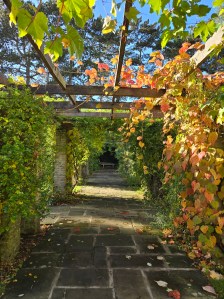
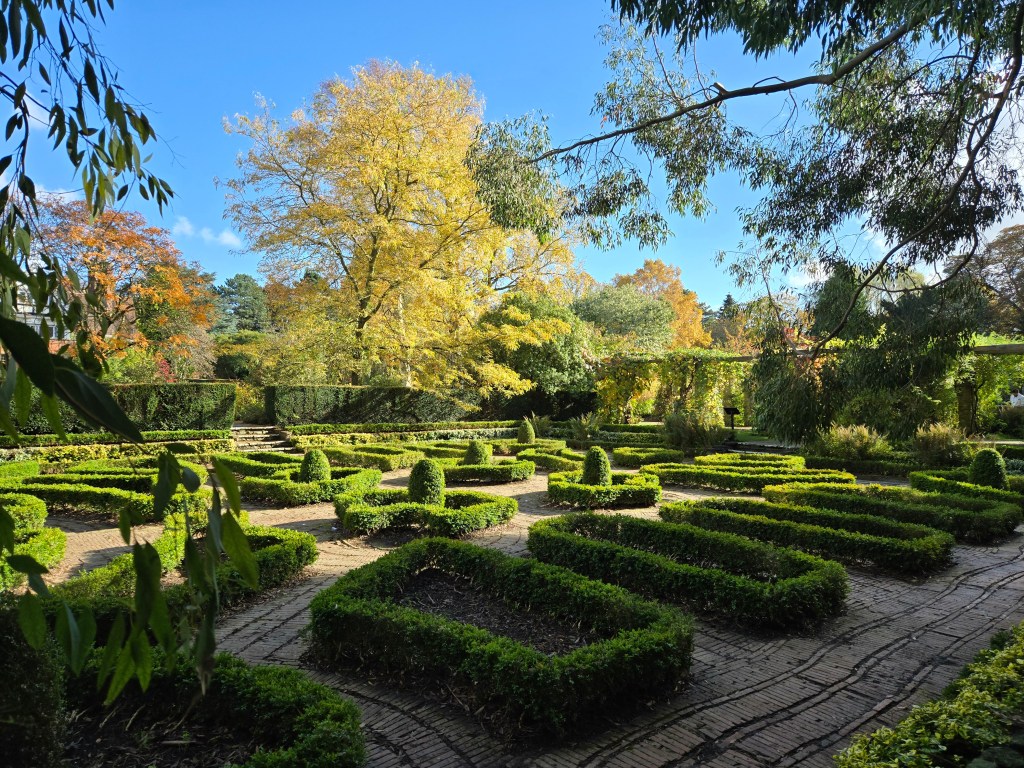
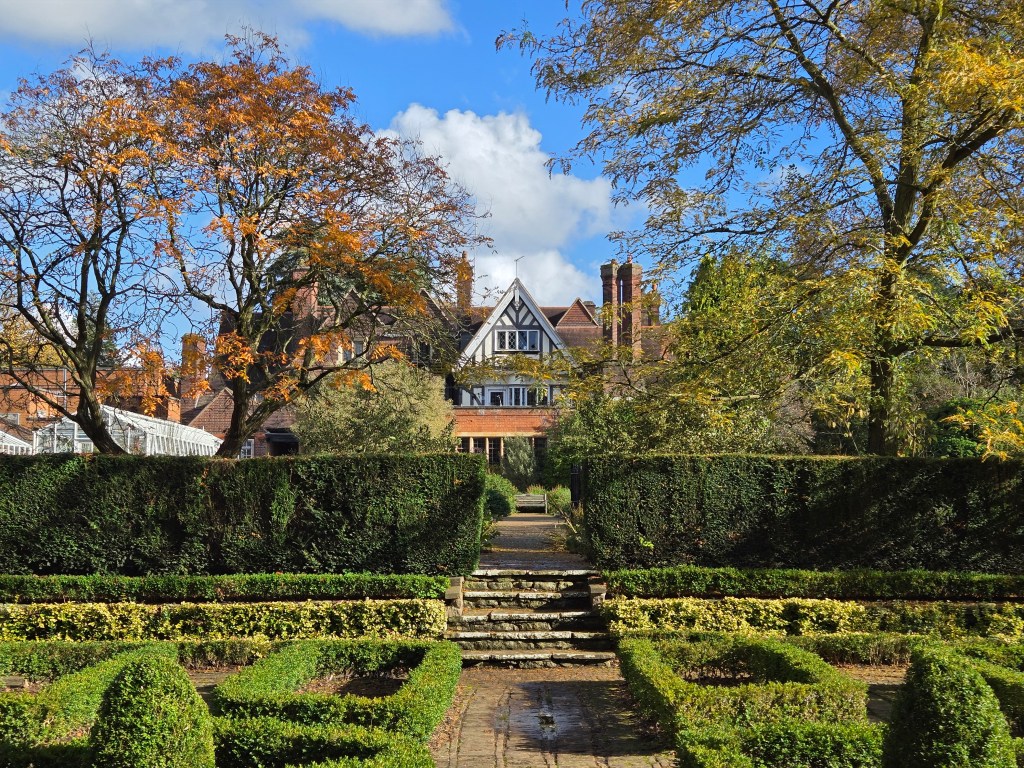
Continuing my path, I came to the sunken garden. This is an Edwardian style garden with overhanging plants and a large rectangular pond.
The best part of this pond, at least to me, were the tiny common pond skaters, a type of bug. These bugs have hydrophobic hairs on their feet that allow them to stand on the surface of the water, incredible! I couldn’t get a picture of them sadly, because they are only a few centimetres across and I am a big scary human, but I hope to one day be able to get pictures of these little guys!
The walk went on, and soon I came to the Fuchsia Garden…
Fuchsia – Fuchsia Magellanica
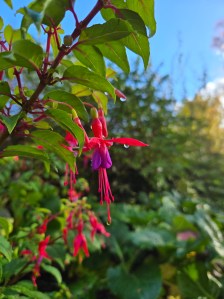
Fuchsia are flowering shrubs. There are over 100 different breeds of fuchsia varying the colours, shape, and size of the shrub. The ones I have photographed are Magellanica, one of the most widespread breeds. The flowers have a gorgeous crimson colour that makes them quite well recognised (at least to people like me) and hang below the leaves and branches of the shrub they flower on.
In the fuchsia garden they have dozens of different breeds of fuchsia creating a slight rainbow as you look around. Beautiful!
Next on the tour was the Japanese garden, a collection of plants, shrubs, and trees from… you guessed it, Japan. The most recognisable of the plants to me was the Japanese maple…
Japanese Maple – Acer Palmatum
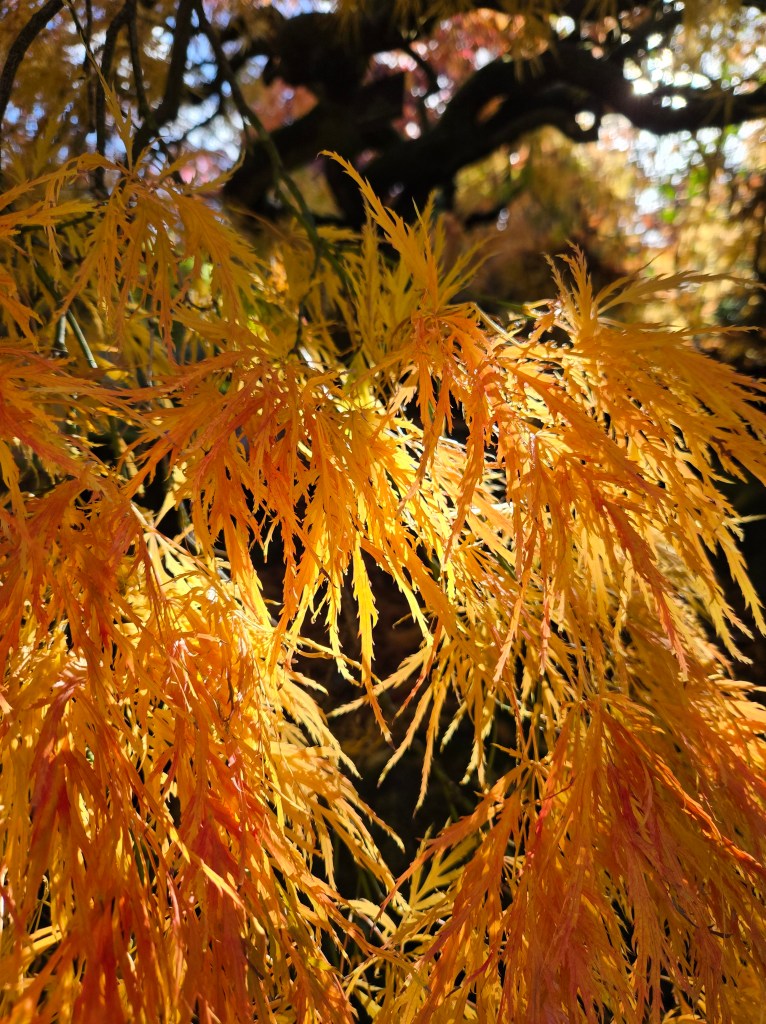
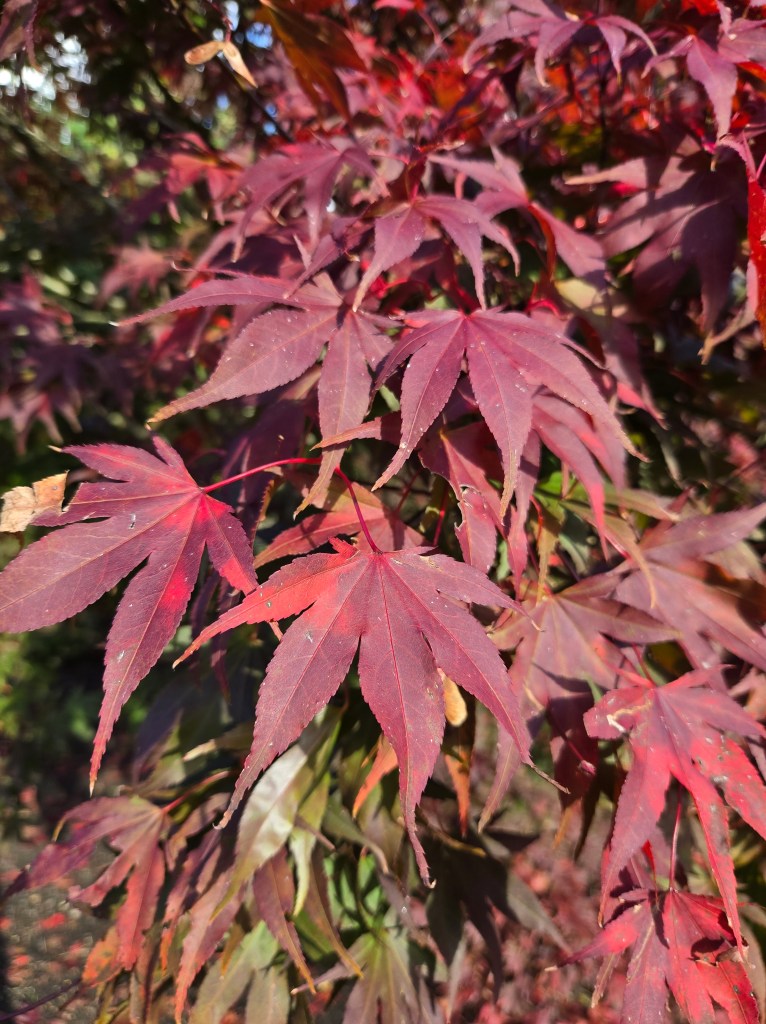
Japanese maples are technically a type of tree, but they never grow to be very big and so are often found growing in peoples gardens (hi mum). These trees have characteristic red leaves and five main segments as oppose to the other maple trees three.
Japanese Maples grow large canopies despite their size and are seen as protective and calming in Japanese folklore. In their adolescent stage, the leaves haven’t formed their red colour yet and instead have a yellowish orange tint giving the tree a firey look.
After all the photography and drawing, I was getting a bit tired. So I took a rest in the limestone garden, and admired the small pond nestled amongst the rocks. There was plenty of duckweed across the surface, but the most noticable thing was the lilypads…
White Water-Lily – Nymphaea Alba
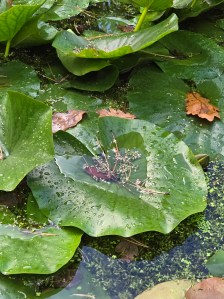
Interestingly enough, lilypads are not plants by themself (sorry plants vs zombies). They are actually the leaves for the flowering water-lily, however the flower is very temporamental about when and where it grows. Water-lilies are actually the national plant of many countries including Iran and Bangladesh (with the Bangladeshi emblazing a water-lily on their national emblem).
Water-lilies are native to almost the entirety of Eurasia so are often found in many folklore stories, especially when it comes to cute little frogs needing a place to sit!
Next I moved to the land of the ferns. Ferns are an odd type of plant, they don’t have flowers and they don’t have seeds, instead they spread via spores. Ferns are everywhere, the amount of times I’ve been hiking over the moor and found myself surrounded by the leafy plants is ridiculous. They are fascinating though, and a sort of mid point between moss and shrubs in terms of the genus families.
I next came across some teasels…
Teasel – Dipascus Fultonum
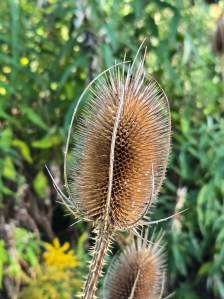
A teasel is actually a type of flower, despite the fact they just look like a bunch of holes. I won’t lie these things kind of freak me out, they are just strangely trypophobic I can’t really stand looking at them for very long. Sorry, I try to be kind and loving to all of nature, and by all means I love the role that teasels play in the world, but I could also happily go the rest of my life never seeing one again.
Fun fact: in ancient times, teasels were used as brushes of sorts for things like wool and even hair due to their spikes. Hence their name: tease-l, for the teasing of knots in fur.
I had almost finished my lap of the gardens, but there was one final plant I was desperate to find. Luckily these trees are so popular, I soon found one…
Monkey Puzzle Tree – Araucaria Araucana

I love these things. Imagine being named because of how much monkey’s dislike you.
Sadly my first fact about them is that monkeys don’t actually struggle to climb these, they’re monkeys they can climb pretty much anything. The name comes from some old horticulturalists who made the offhand statement that “it would puzzle a monkey to climb [it]”, and the name just stuck.
Monkey puzzle trees are evergreen, which means the leaves never fall off year round. They are endangered trees (probably the monkeys) but are very popular around the world and can be found in many different climates and regions.
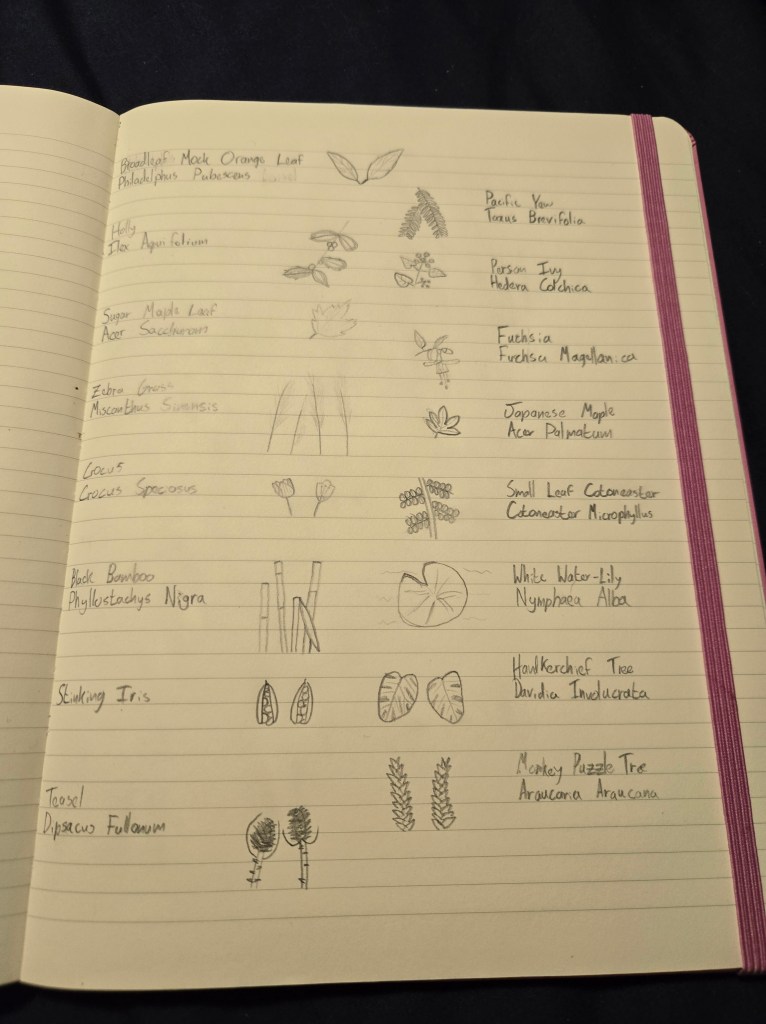
With that, my tour of the botanical garden is complete. I had a really nice relaxing time walking around, seeing all of the beautiful trees, and smelling all of the sweet flowers. As mentioned, here are my drawings of a few of the plants that I saw on my stroll:
I’m feeling much more ready to continue my studies.
Bring it on!
Cassie 🙂




Leave a reply to mysticalpost8f0b78242d Cancel reply