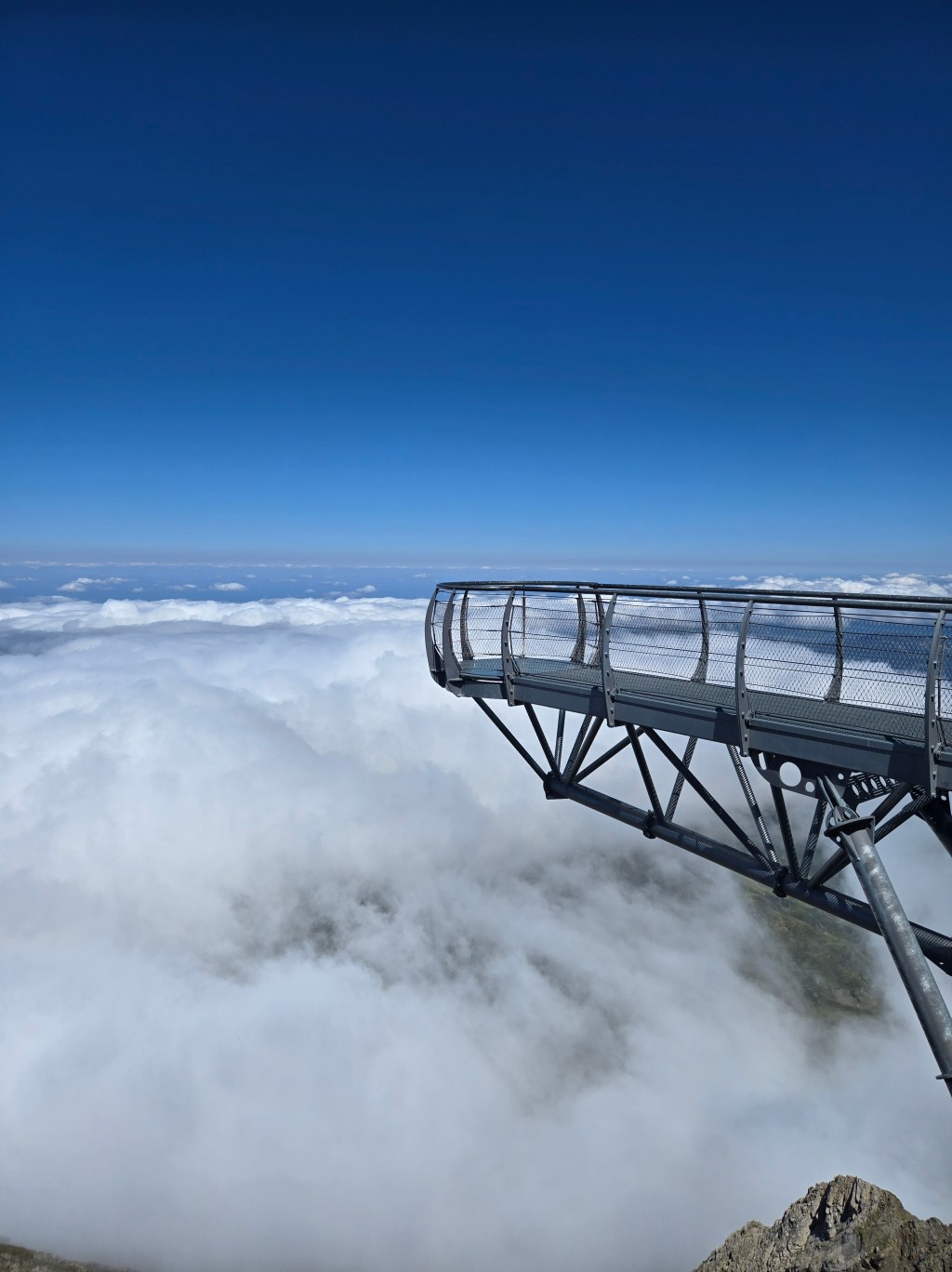
I gazed forward along the pontoon, the echoing clang of my footsteps in my ear as I took each further step towards the edge. The more I walked, the more my legs begin to tremble, until eventually I reached the final waist-high handrail; the only thing standing between myself and a 2,000 metre drop into the valley below.
Hidden atop a mountain in the Pyrenees, is a lone observatory that has been tasked with observing the night skies for over a hundred years. Appropriately called the Pic du Midi (Mountain of the South) observatory, the facility has been a constant work of improvement since it initially began its construction in 1878; with new domes, buildings, and equipment being added to the architecture over many different periods.
Today, my cohort and I will be visiting the observatory to learn all about its history and the incredible site it is built upon. First of all though, we have quite the journey in order to get to it!
A Journey into the Sky.
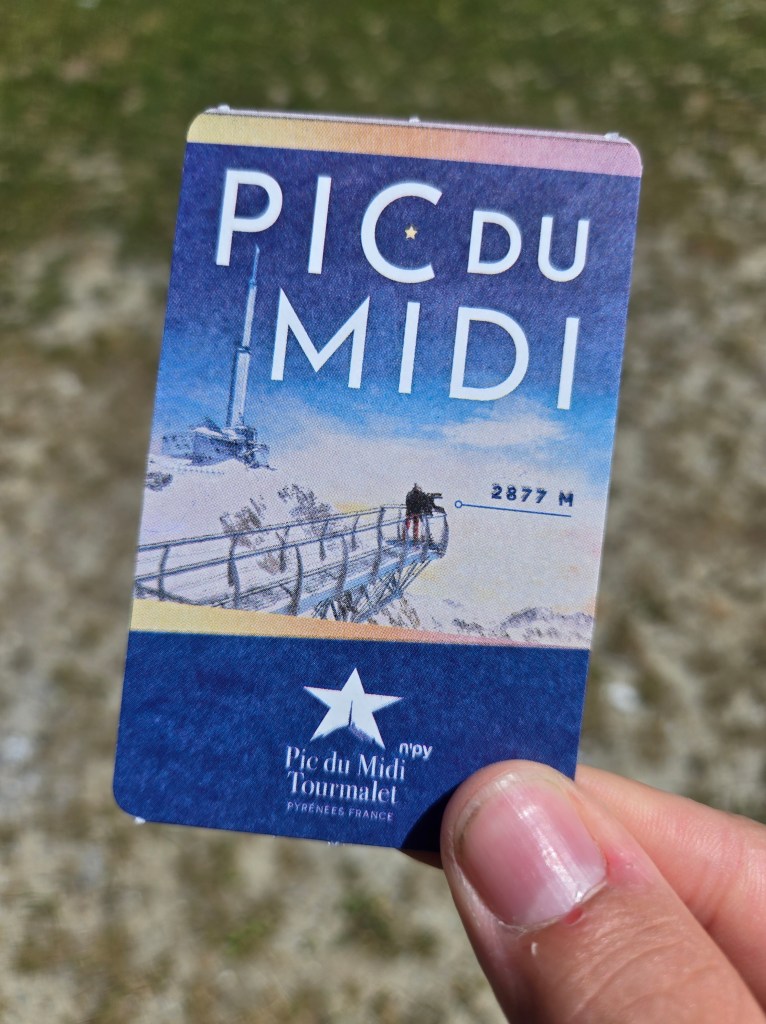
A two-hour coach ride from our starting point at the ISAE Supaero campus in Toulouse got us to the base of the mountain: a ski village known as La Mongie, situated at 1,800 metres above sea level. This altitude was already higher than my most recent mountain trip to Zermatt, but the climb had only just begun.
After a brief stop to eat lunch, we bought our tickets for the cable car (a steep 52€ for the return trip) and huddled into the suspended car. Once the doors had closed, the car released and we began to climb upwards into the clouds.
The fear I felt as the cable car climbed was indescribable. We were travelling suspended above an enormous valley, the drop was easily about 500 metres into the rocks below; I could hear a few of the other travellers whispering under their breath “Don’t look down, don’t look down!” Occasionally, as the cable car passed over a connector, it began to swing forward and backward making my heart pound in my ears. Soon enough though, the cable car was pulling into the final station, the Pic du Midi observatory…
Altitude: 2,877 metres above sea level.
The View of the Gods
After escaping the confines of the cable car, and having a brief introductory talk from a tour guide, we were free to explore the open areas of the facility. Of course, for all of us this meant immediately heading to the outside balcony to take in the incredible view.
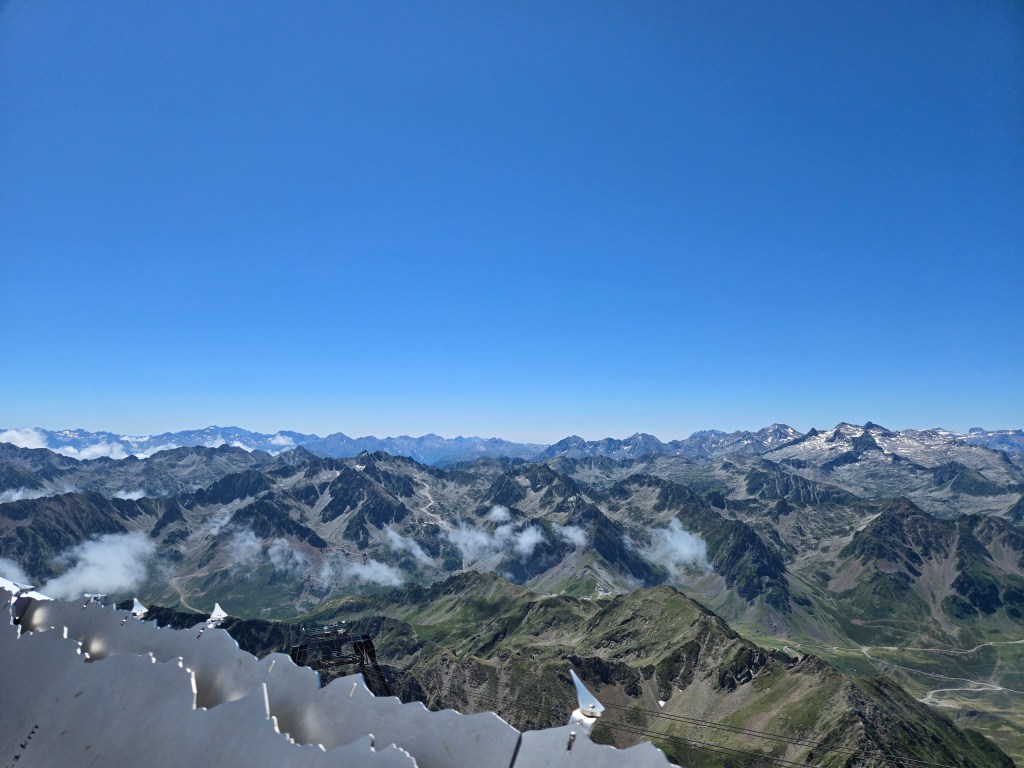
Indeed, the sights did not disappoint. At this altitude, we were above the major cloud layers, and, on a clear day like it was, one could easily see for hundreds of kilometres. To the south, there were the many peaks of the Pyrenees, some French, some Spanish; to the North there was the spreading expanse of Southwestern France where I thought I might be able to spot Auch.
In every direction though, it felt like gazing upon a dream, seeing things no human eye should see, matching the view of the Gods.
On top of the already incredible view, the main attraction here in the outside terrace was the pontoon, a long metal balcony stretching out from the ground over a large mountain ravine. It’s a popular spot to have a picture taken, if one is brave enough to step out over certain death. Thankfully, after everything I’ve experienced in my travels around Europe, I knew I had it in me and began my walk to the edge.
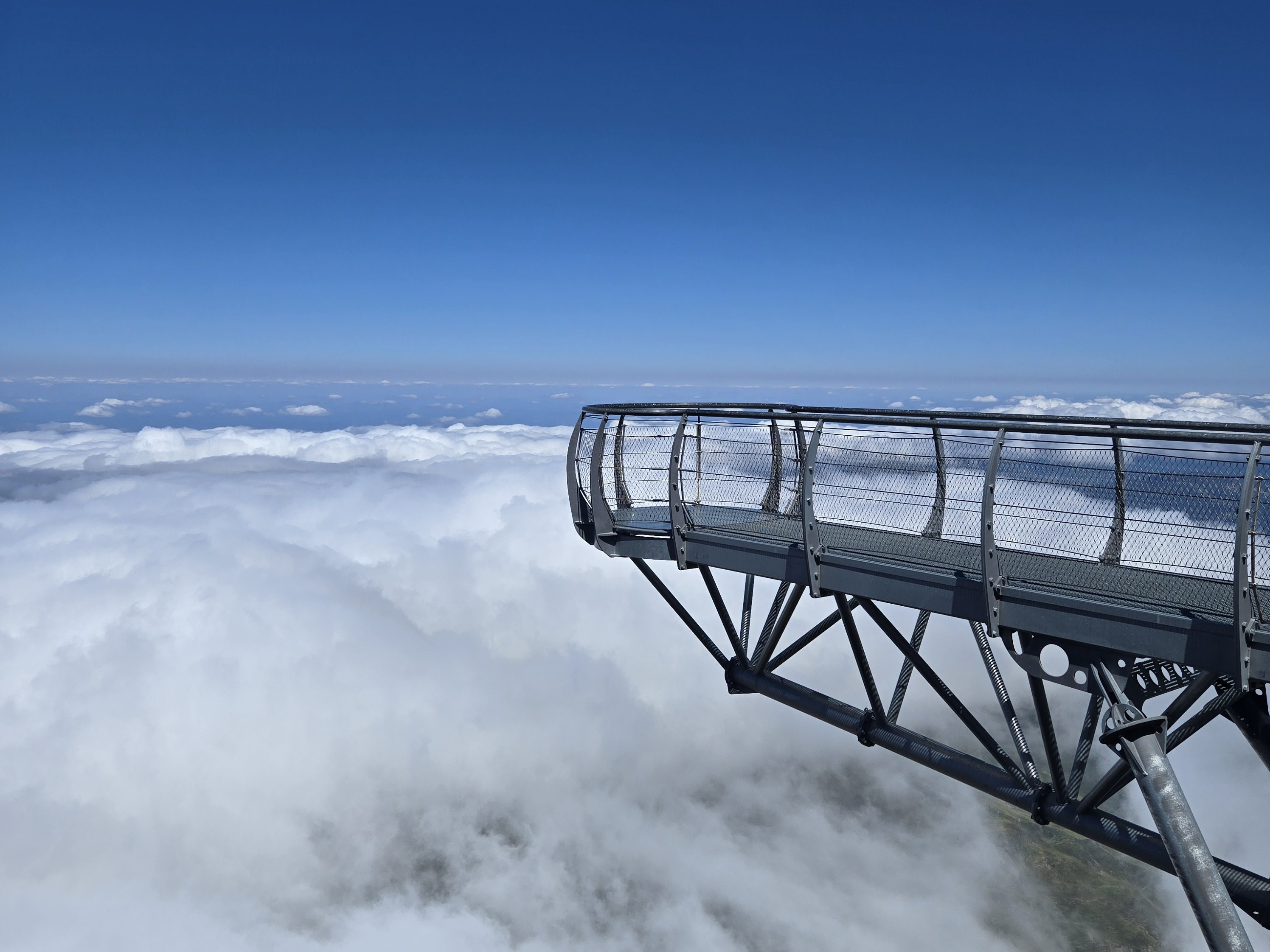
I gazed forward along the pontoon, the echoing clang of my footsteps in my ear as I took each further step towards the edge. The more I walked, the more my legs begin to tremble, until eventually I reached the final waist-high handrail; the only thing standing between myself and a 2,000 metre drop into the valley below. As I stood, gazing out over the cloud tops, there was a moment of peace for me. I was only about 10 metres away from the people stood back at the observatory, and yet with the mountain wind I could barely hear them. It was just me, the sky, and the Earth.
After admiring the view a little more, and taking as many pictures as possible. I carefully walked back along the pontoon to stable ground. I’d seen enough views for now, it was time to explore what else the facility had to offer.
The Museum at the Mountaintop
Because of its rich history, the observatory has dedicated a large section of the facility to a museum detailing almost everything that has happened here over it’s century and a half of life.
Despite the impressive the location of the museum from the get-go, they spared no expense to ensure it is as informative of an experience as possible, starting with a few fully interactive exhibits that utilise a provided tablet at the museum entrance.
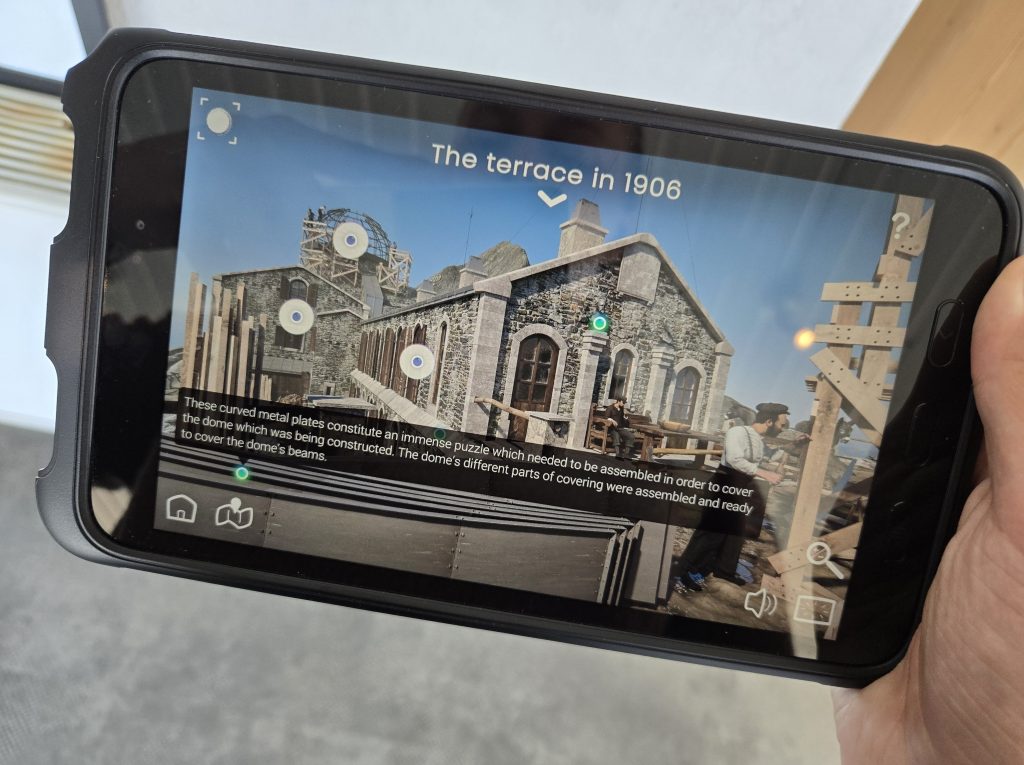
The tablet works by utilising wall murals which are dotted throughout the museum, by scanning these with the tablets camera, scenes of the observatory from days gone by can be found. These scenes have numerous highlighted points that each display a block of text, which describe the history and usage of the item it represents; such as the following excerpt from the Campbell-Stokes Recorder:
A weather forecasting instrument which measures and records the hours of sunshine during a day. A card, held in place by three overlapping sets of grooves, is burnt or discoloured by sunrays. The recording of each day goes onto one card which has been yellowed by the Sun.
The final brilliance of the interactive side of the exhibit comes in the form of collectibles. Within each scene there are hidden scraps of paper only found by reading all of the articles, and properly exploring the area. Once found, the papers all add up into one full blueprint that displays an incredible piece of technology that was used in the early days of the observatory; but I’ll leave that for you to discover yourself!
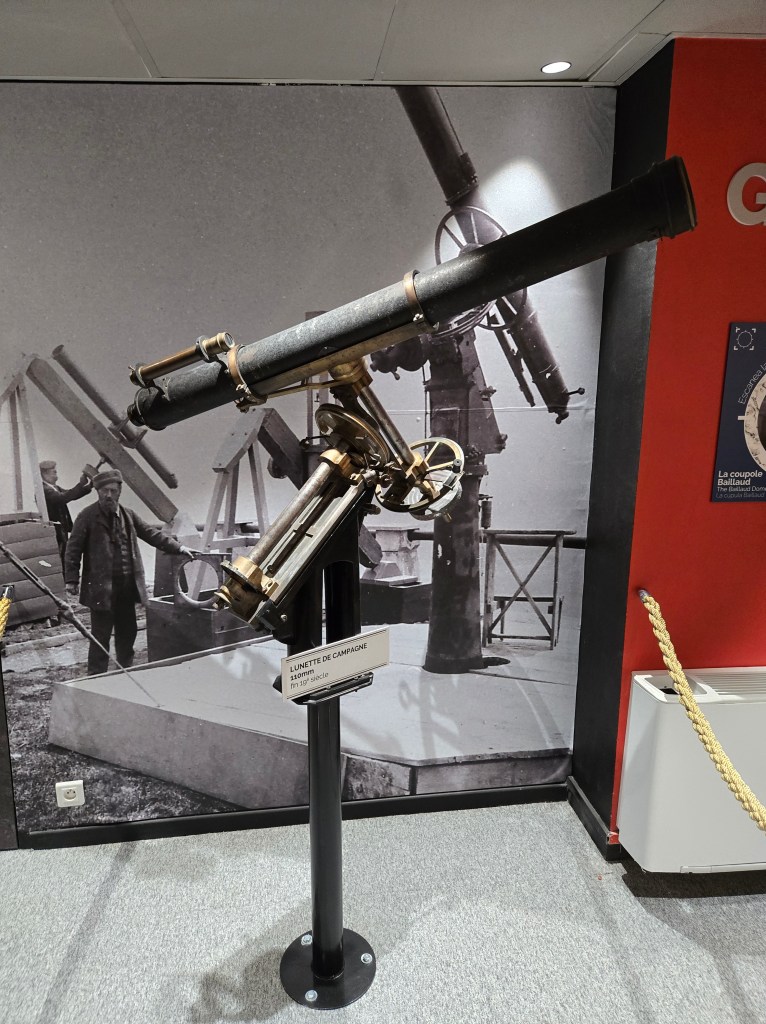
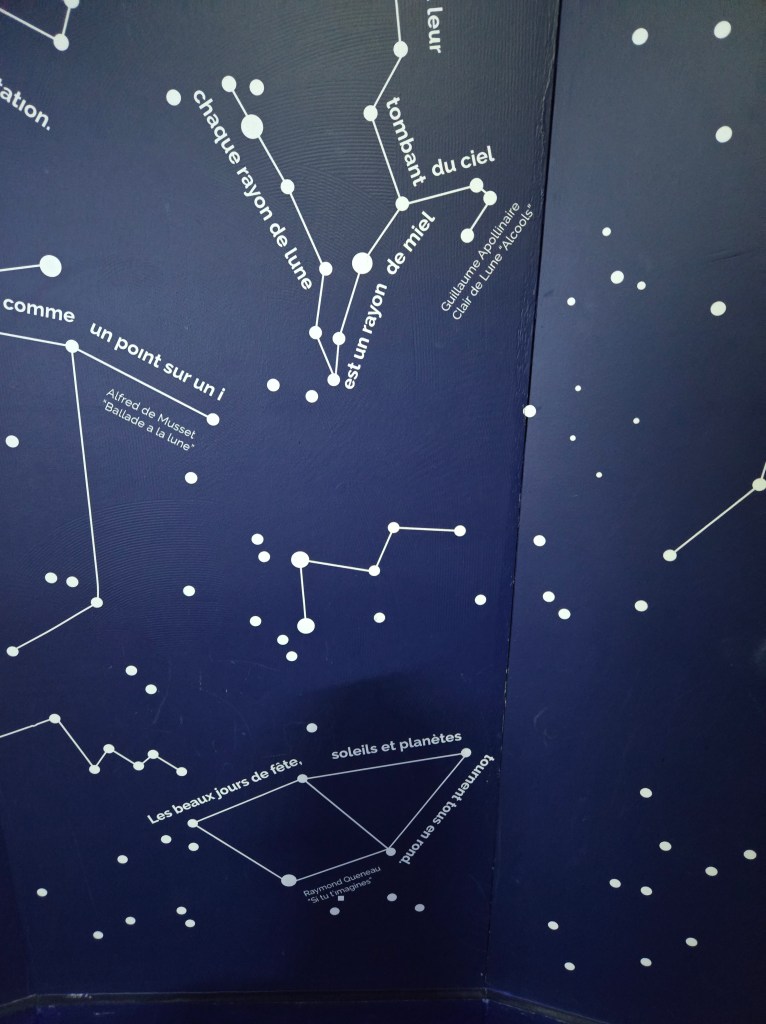
The tablet isn’t all there is to see however, there are plenty of in person exhibits for you to gaze upon and learn about. Thankfully, each of the exhbits here in the museum gives its information in French, Spanish, and English so it’s completely accessible to people no matter your origin. There are exhibits that teach about the general physics of Astronomy, and others that show what the room you’re in was used for such as the kitchen or the observing room.
As mentioned, construction began on the observatory in 1878 with the initial large dome. The building of this involved hundreds upon hundreds of hours of manual labour as people worked day and night to carry materials up the mountain and build everything in its proper place. Work on the observatory could only be carried out in the summer, as the workers wouldn’t be able to survive in the winter without the proper provisions, so the initial buildings took around 30 years to be built to completion!
Once proper lodgings were built, the additional buildings took much less time to be built. New telescopes were built in the 1960s and 1980s, and the observatory was named as an official dark sky reserve in the early 2010s.
These days, whilst still used for genuine astronomy, the observatory is most well known for its tourism. Numerous events are held throughout the year such as concerts and night sky sleepovers where visitors can undertake a once in a lifetime experience nearly 3,000 meters in altitude.
It took me around an hour to get all the way through the museum whilst making sure to look at everything, and it was fascinating to learn everything I could about this impressive feat of architecture. Before long, I found myself returning the tablet to its dock and heading back outside into the mountain air.
Outside Exhibits
Not all of the exhibits and information is confined to the open buildings however, out on the terrace there are a few more interesting signs and sights to learn a little extra about the observatory and it’s location.
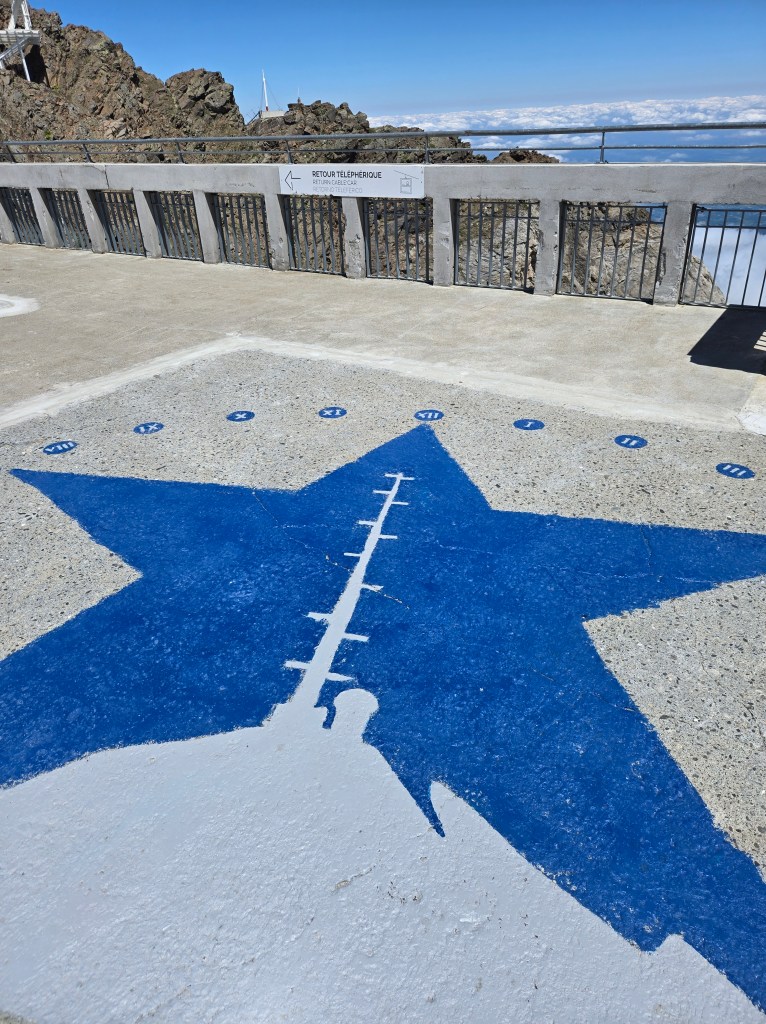
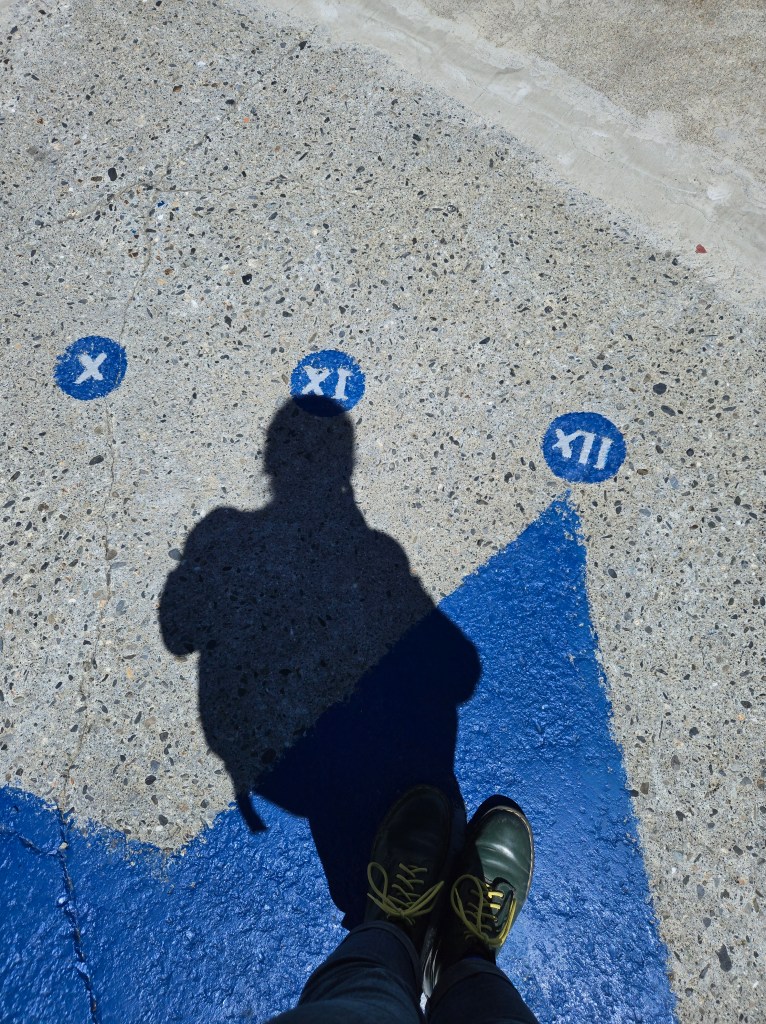
The first thing I came across was a ground-based sundial that uses my shadow to tell the time of day, so long as I stand in the right spot. As it’s summer time, daylight savings is accounted for by adding two hours to the time it displays. Sure enough it was exactly 1pm when I tested it out for myself showing how accurate these can be!
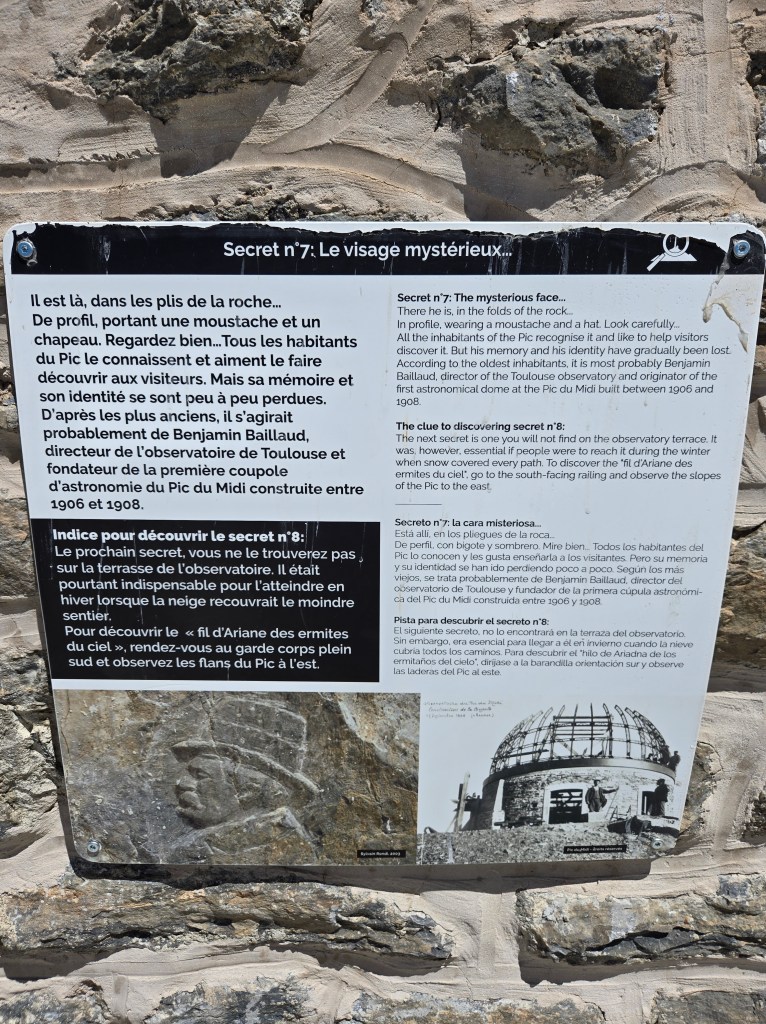
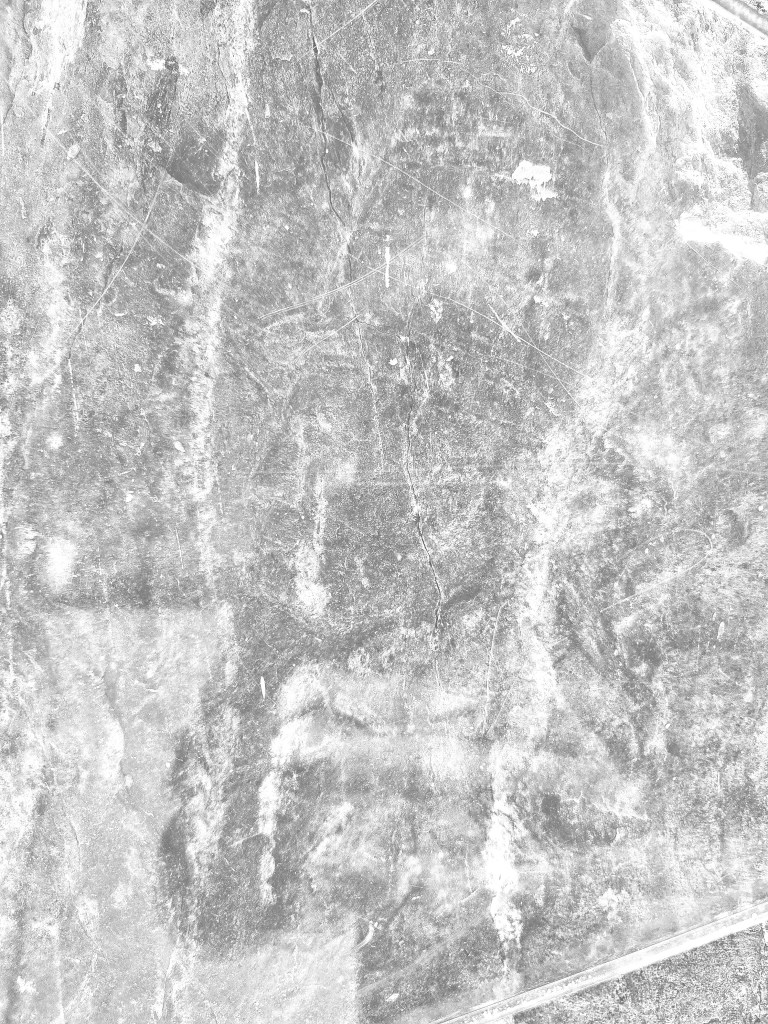
Finally, hidden around the terrace are about a dozen signs that tell a little history of the place where you stand to read it. The sign I found below (number seven) told all about a face hidden in one of the bricks that were used to build the dome. Sure enough a quick look at a nearby wall shows our culprit: Benjamin Baillaud, the president of the French astronomy society in the early 20th century!
Not too long after this, it was time to head back down the mountain and catch our coach back home. Of course, not before a quick trip to the gift shop where I managed to get myself a new cap and a t-shirt to remember my excellent trip to the observatory in the sky!
As I settled in to my coach ride home, I glanced out of the windows to see the mountains disappearing behind me, part of me wondered if I had really seen all of those incredible sights. The high altitude mixed with my fear from the cable car couldnt have made me experience a brief spell of insanity could it?
For a moment though, the hills parted, and there, on top of a the tallest mountain for miles, stood the observatory in the sky…
The Pic du Midi, an impossible building with a truly fascinating story.
*
Thanks for reading, this was my first attempt to properly write an article like so many others I’ve read for peoples travels. I hope you enjoyed it but I’m always looking to improve my writing. If you have any comments I implore you to leave them below and I’ll definitely take it in 🙂
Cassie




Leave a reply to Cassiopeia Cancel reply